Bulk Sourcing: How I Evaluate Philip Flat Head Self Tapping And Self Drilling Screw Quality
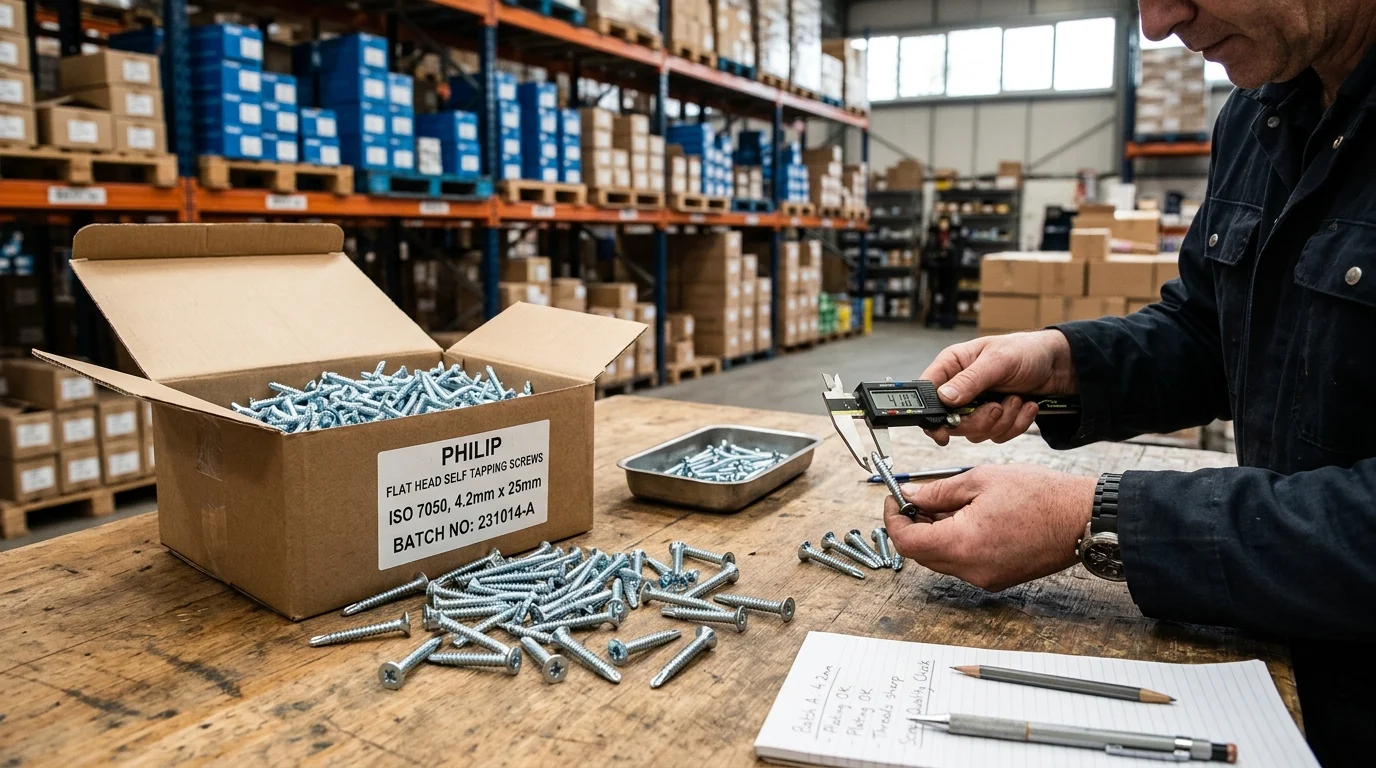
Frame Screw Sourcing as a Margin and Risk Decision
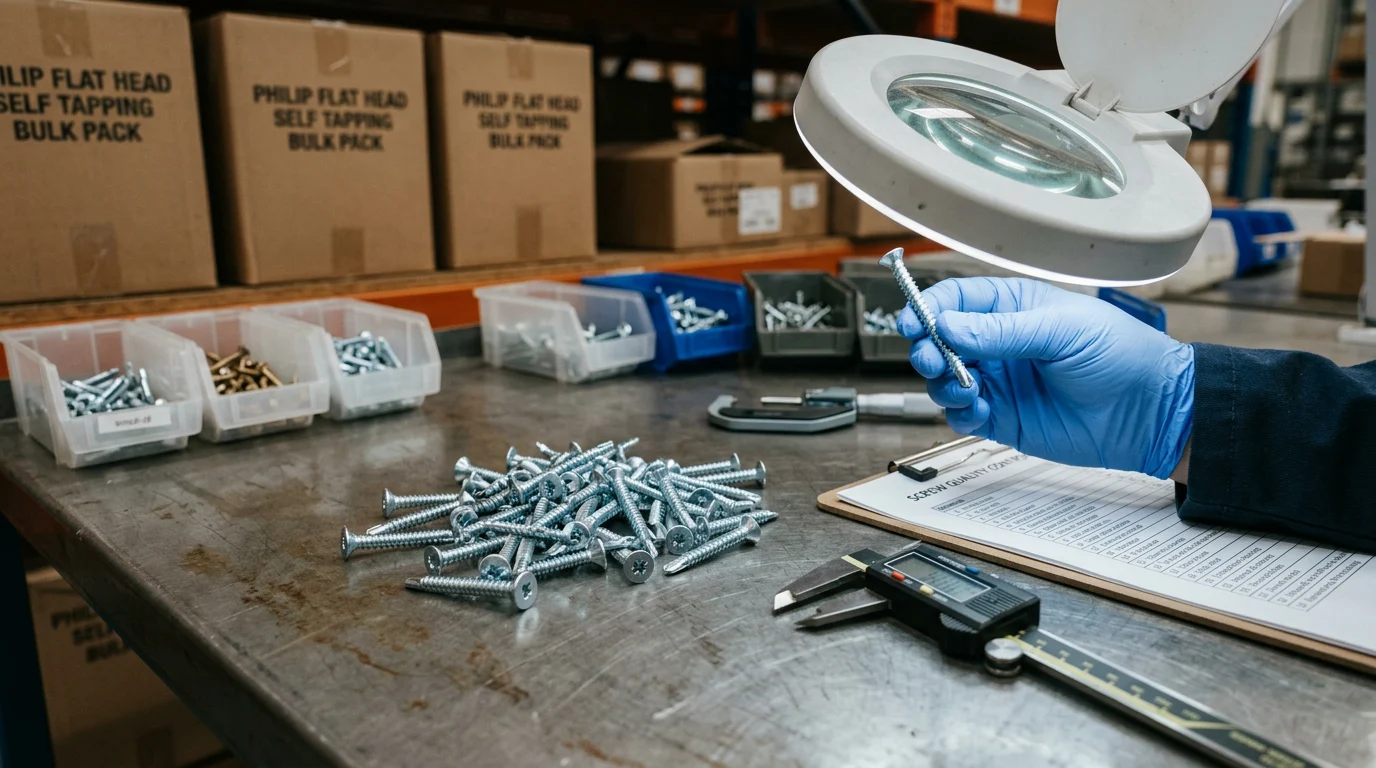
When I look at my procurement portfolio, fasteners are rarely the most expensive item on the bill of materials, but they are absolutely the highest volume. Sourcing Philip flat head self tapping and self drilling screws is a classic volume game. If you get the spec wrong, you aren’t just dealing with a few defective units; you are dealing with millions of useless screws that will jam assembly lines or fail in the field. This is why I always treat Bulk Sourcing of fasteners as a critical margin and risk decision rather than a simple purchasing task.
The reality of the global fastener market is that you get exactly what you negotiate and verify. Many buyers make the mistake of treating a screw as a simple commodity, blasting out RFQs to a dozen factories, and picking the lowest price. But a poorly heat-treated screw that shears off during installation will cost your company exponentially more in chargebacks, lost clients, and rework than the fraction of a cent you saved on the unit price.
To build a reliable supply chain, I have to step back and look at the entire lifecycle of the product. From the factory floor to the end-user’s drill, every step introduces variables in cost and performance. Establishing a solid sourcing framework requires looking past the FOB price and understanding how quality impacts the bottom line.
Treat quality as a landed-cost and complaint-rate issue
I never look at the unit price in a vacuum. A cheap screw that rusts prematurely or has inconsistent drive recesses leads to high complaint rates from my distributors. When calculating landed cost, I factor in the hidden costs of poor quality: sorting defective batches, handling customer returns, and the administrative burden of filing claims with overseas suppliers. A slightly higher upfront cost for a supplier with strict quality control almost always yields a lower true landed cost.
Map demand across wholesale, OEM, construction, and fabrication channels
Different sales channels require entirely different sourcing strategies. For wholesale distributors, I focus heavily on packaging aesthetics, barcode accuracy, and broad sizing ranges. When buying for OEM fabrication, the priority shifts to tight dimensional tolerances, head concentricity, and bulk packaging efficiency to feed automated assembly lines. I always map out exactly where the screws are going before I start talking to factories.
Define priorities for application, volume, finish, compliance, packaging, and target margin
Before issuing a single RFQ, I write down my non-negotiables. What is the target margin for this SKU? Does the application require a specific salt spray resistance? Am I buying enough volume to justify custom packaging, or should I stick to standard export cartons? By defining these priorities early, I avoid getting derailed by suppliers offering cheap alternatives that don’t actually fit my channel requirements.
Lock Specifications Before Quoting
If there is one lesson I’ve learned the hard way in fastener procurement, it’s that vague inquiries invite manipulated quotes. If I simply ask a factory for “flat head screws,” I am leaving the door wide open for them to quote the cheapest, lowest-grade material with minimal rust protection. To compare suppliers fairly, I have to force them into an “apples to apples” comparison.
This means I dictate the specifications down to the millimeter and the material grade. I need to know the exact Phillips Flat Head dimensions, the angle of the countersink, and the specific drill point number. If I don’t lock these details in before the quoting phase, I’ll spend weeks trying to figure out why Supplier A is 20% cheaper than Supplier B, only to discover Supplier A is quoting a thinner wire diameter and a cheaper plating process.
Having a rigid specification sheet also signals to the supplier that I am a professional buyer. Factories treat knowledgeable buyers differently. When they see a highly detailed RFQ citing specific DIN or ISO standards, they know they can’t cut corners on the quote without being caught during the sample testing phase.
Confirm head style, Phillips drive, thread type, drill point, countersunk angle, diameter, length, and tolerance
I spell out every geometric detail. For flat heads, the countersunk angle is usually 90 degrees, but I state it anyway. I specify the exact Phillips drive size (e.g., PH2 or PH3) to ensure proper bit engagement. I detail the thread pitch, the drill point size (like #2 or #3 point depending on the metal thickness it needs to pierce), and the acceptable +/- tolerances for the overall length and thread diameter.
Compare materials and hardness ranges for carbon steel, stainless steel, and hardened applications
Material dictates performance. For standard self-drilling screws, I usually specify C1022A carbon steel because it can be case-hardened to achieve the necessary surface hardness for drilling into metal while maintaining core ductility. If I’m sourcing for marine or highly corrosive environments, I pivot to SS304 or SS410 stainless steel, explicitly noting the required hardness ranges to ensure the drill point won’t flatten upon impact.
Evaluate zinc plating, black phosphate, nickel plating, Dacromet-type coating, and corrosion-resistant finishes
Coating is where a lot of suppliers try to save money. I use a standard matrix to match the finish to the application.
| Finish Type | Typical Salt Spray Test (SST) | Best Application | Relative Cost |
|---|---|---|---|
| Zinc Plated (Clear/Blue) | 24 – 48 Hours | Indoor construction, furniture | Low |
| Black Phosphate | 24 – 48 Hours | Drywall, indoor framing | Low |
| Yellow Zinc | 48 – 72 Hours | General indoor/mild outdoor | Low-Medium |
| Dacromet / Ruspert | 500 – 1000+ Hours | Harsh outdoor, marine, industrial | High |
Request drawings, samples, or standard references to prevent quotation mismatches
I never rely on text descriptions alone. I explicitly request technical CAD drawings from the supplier alongside their quote. If we are working off standard international norms, I cite them directly (such as DIN 7982 for countersunk self-tapping screws or DIN 7504P for self-drilling). Requesting these standard references leaves zero ambiguity about what I expect to be delivered.
Compare Supplier Quality and Capability
Once the quotes roll in, the real vetting begins. It is incredibly easy for a supplier to look great on an Alibaba storefront or a slick PDF brochure, but the reality of their factory floor can be vastly different. I need to know if I am dealing with a genuine manufacturer who controls their own quality, or a middleman who is outsourcing to the lowest bidder.
I dig deep into the manufacturing ecosystem. The Industrial Fastener supply chain relies heavily on localized clusters for wire drawing, cold heading, thread rolling, and plating. Even the best manufacturer usually outsources their plating. Understanding who they partner with for heat treatment and surface finishing tells me a lot about the final product’s reliability.
My goal in this phase is to find the sweet spot between production scale and quality control. A massive factory might have great pricing but terrible lead times and zero flexibility for my custom packaging. A smaller factory might be agile but lack the automated optical sorting machines necessary to keep defect rates below my acceptable thresholds.
Check production equipment, heat treatment control, plating partners, inspection records, and export history
I ask for videos of their cold heading and thread rolling machines. I want to know if their heat treatment furnaces are continuous mesh belt types with strict temperature controls. Because plating is usually outsourced, I ask for the names of their plating partners. Finally, I review their export history to my specific region to ensure they understand my local market’s quality expectations.
Compare material grade, hardness, coating thickness, salt spray hours, drill performance, MOQ, lead time, and defect allowance
I build a spreadsheet to compare the hard data. I track the promised coating thickness (usually in microns), guaranteed salt spray hours, and drill performance (e.g., drilling through 2mm steel in under 3 seconds). I also compare their Minimum Order Quantities (MOQ), production lead times, and what percentage of defects they consider “acceptable” within a batch.
Request pre-production samples, golden samples, and batch photos before mass production
Before any money changes hands for a bulk order, I demand pre-production samples. Once approved, I sign off on a “golden sample” that serves as the absolute benchmark for the entire run. I also require the factory to send me high-resolution photos of the raw materials, the unplated screws, and the final packaged batch during the mass production phase.
Separate trading company value from manufacturer value
I don’t inherently avoid trading companies; they can offer great value if I need to consolidate multiple fastener types (like nuts, bolts, washers, and screws) into a single container. However, for high-volume, single-SKU bulk orders of self-drilling screws, I always prefer going direct to the manufacturer to eliminate the middleman markup and maintain direct control over the technical specifications.
Prioritize Testing and Inspection
Trusting a supplier is great, but verifying their output is mandatory. Fasteners are produced at speeds of hundreds of pieces per minute. A worn-out header die or a slight miscalibration in the thread rolling machine can result in hundreds of thousands of defective screws before anyone notices.
This is why my Quality Evaluation protocols are incredibly rigid. I don’t just wait for the goods to arrive at my warehouse to see if they work. I implement inspection routines at the factory level. I want to catch a shallow Phillips recess or a blunt drill point before the goods are ever loaded onto a vessel.
Testing isn’t just about dimensions; it’s about physical performance. A screw can look perfect on a micrometer but snap in half under torque because the heat treatment made the core too brittle. I mandate both dimensional checks and destructive physical testing for every single batch.
Review dimensions, head concentricity, drive recess depth, point geometry, and thread consistency
My inspectors use calipers and micrometers to verify the major and minor thread diameters. We check head concentricity to ensure the screw won’t wobble when chucked into a drill. The drive recess depth is critical—if it’s too shallow, the driver bit will cam out and strip the head. We also inspect the point geometry to ensure the cutting flutes are sharp and symmetrical.
Test torsional strength, pull-out performance, drilling speed, thread forming ability, and case hardness
Physical testing is where the rubber meets the road. We perform torque tests to see how much rotational force the screw can take before snapping. We test the drilling speed by timing how long it takes to penetrate a standard steel plate. We also check the case hardness (surface) versus the core hardness to ensure the screw is hard enough to cut metal but ductile enough to bend slightly without breaking.
Assess salt spray results, coating adhesion, surface uniformity, and rust-prevention packaging
To verify the finish, we review the factory’s salt spray test (SST) reports to confirm rust resistance. We also check coating adhesion—if the zinc flakes off when the screw is driven, the protection is useless. Finally, we inspect the packaging to ensure the factory is using desiccant packets or VCI (Volatile Corrosion Inhibitor) bags to prevent flash rusting during the humid ocean transit.
Use AQL, random inspection, and third-party testing before shipment release
I never authorize the final balance payment until an inspection is passed. I use standard Acceptable Quality Limit (AQL) tables, typically setting a strict AQL of 1.5 for major defects and 4.0 for minor defects. For new suppliers, I hire independent third-party inspection agencies to pull random samples from the sealed cartons before the container is loaded.
Negotiate MOQ, Pricing, and Packaging
Negotiating fasteners is a delicate balance. Pushing too hard on the unit price often results in the supplier quietly cutting corners on the coating thickness or packaging quality to preserve their margin. Instead of blindly demanding a lower price, I negotiate based on cost breakdowns.
Packaging is an often-overlooked cost driver in bulk sourcing. Screws are incredibly dense and heavy. Flimsy cartons will disintegrate under their own weight during ocean transit, leaving you with a container full of loose, mixed screws. I spend just as much time negotiating the carton strength and pallet configuration as I do the price of the steel.
By understanding the cost drivers, I can find creative ways to meet my target pricing. Sometimes increasing the MOQ on a specific length allows the factory to run the machines longer without changeovers, dropping the price naturally without sacrificing quality.
Calculate price from material, heat treatment, coating, carton design, palletization, inspection, and freight
I ask suppliers to break down their costs.
Chart: Standard Fastener Cost Breakdown (Estimated)
- Raw Material (Carbon Steel/Stainless): 40-45%
- Manufacturing & Heat Treatment: 20-25%
- Plating & Coating: 10-15%
- Packaging & Palletization: 10%
- Margin/Overhead: 5-10%
Understanding this breakdown helps me push back logically. If steel prices drop globally, I expect the 45% raw material portion of my quote to drop accordingly.
Negotiate MOQ for standard sizes, custom lengths, custom coating, private label packaging, and mixed-container orders
Standard sizes (like #8 x 1/2″) usually have low MOQs because factories run them constantly. Custom lengths or specialized Dacromet coatings require much higher MOQs (often 500,000+ pieces) to justify the machine setup time. I negotiate by offering to mix several standard and custom sizes into one FCL (Full Container Load) to help the factory absorb the setup costs.
Choose bulk cartons, small boxes, blister-ready packs, distributor cartons, or OEM bagging
The packaging format depends entirely on my sales channel. For OEMs, I buy in 20kg bulk dump-cartons. For wholesale distributors, I require small, branded inner boxes (e.g., 100 or 500 pieces per box) packed into master cartons. I make sure the factory knows exactly which format I need before they quote, as small-box packing requires significant manual labor.
Clarify barcodes, label language, carton strength, pallet height, and moisture protection
I provide explicit label templates, including EAN/UPC barcodes, exact translation text, and color codes. I mandate double-wall corrugated master cartons with a minimum burst strength, and I restrict pallet heights to ensure they can be double-stacked in my warehouse without crushing the bottom rows. Moisture protection via plastic inner liners is absolutely mandatory.
Manage Logistics, Compliance, and Import Cost
Shipping heavy metal across the ocean is a logistical puzzle. Fasteners max out the weight limit of a shipping container long before they fill the physical volume. If I don’t plan my logistics correctly, my freight costs per kilogram will destroy my profit margins.
Compliance is another massive hurdle. Fasteners are frequently targeted by trade tariffs, anti-dumping duties, and strict customs scrutiny. A simple misclassification on a commercial invoice can result in massive unexpected tax bills at the destination port.
I treat logistics and compliance as a core part of the sourcing process. I work closely with my freight forwarders and customs brokers to ensure every document is perfect and that we are utilizing the most cost-effective shipping methods available.
Compare FOB, CIF, DDP, air freight, LCL, and FCL options
I almost exclusively buy FOB (Free On Board) and manage the ocean freight through my own forwarder to maintain control over costs. Air freight is out of the question for fasteners unless there is a catastrophic line-down emergency. Because of the density of screws, FCL (Full Container Load) is the only way to get competitive freight rates; LCL (Less than Container Load) is too expensive per ton.
Prepare commercial invoice, packing list, bill of lading, certificate of origin, test report, and material declaration
Customs clearance requires a flawless paperwork trail. I ensure the factory provides a detailed commercial invoice, a highly accurate packing list (with net and gross weights), the Bill of Lading, and a Certificate of Origin. I also require the factory’s material test reports (MTRs) and plating declarations to prove the goods meet the stated specifications.
Check HS code, duty exposure, anti-dumping risk, marking requirements, and destination-market standards
The HS Code for self-tapping/self-drilling screws (usually under 7318.14 or 7318.15) must be exact. I aggressively monitor anti-dumping duties, which many Western countries impose on specific steel fasteners from Asia. I also ensure the physical packaging meets all destination-market marking requirements, such as “Made in [Country]” labels on every single inner box.
Plan buffer stock, production lead time, inspection windows, and seasonal freight delays
Fastener production takes time—usually 30 to 45 days—plus another 30 days on the water. I factor in a two-week buffer for third-party inspections and potential rework. I also plan my heavy purchasing around seasonal disruptions like the Lunar New Year or peak holiday shipping seasons to ensure my warehouses never run dry.
Answer Common Bulk Buying Questions
When bringing new junior buyers onto my procurement team, I always face the same set of questions regarding fastener sourcing. The terminology can be confusing, and the line between over-specifying and under-specifying is thin.
To streamline the training process, I keep a running list of the most common bulk buying questions. This helps my team understand the “why” behind the strict rules we enforce when dealing with overseas factories.
Self tapping vs self drilling screws for procurement purposes
For procurement, the distinction is critical. Self-Drilling screws have a distinct drill-bit point (TEK point) that cuts its own hole in thicker metals without a pilot hole. Self-tapping screws have a sharp, pointed tip (like a Type A or AB point) and require a pre-drilled hole in metal, though they can pierce thin sheet metal or wood directly. Mixing these up on a PO is a costly disaster.
Sample quantities to test before approving a bulk order
I never accept just two or three screws as a sample. I require a minimum of 200 to 500 pieces from the actual production tooling. This allows my QA team to run sufficient statistical torque and drill-speed tests, check dimensional consistency across a meaningful sample size, and keep control samples on hand for when the mass production arrives.
Coating options for corrosion resistance at competitive wholesale pricing
If I need high corrosion resistance without blowing up the budget, I avoid basic zinc plating and opt for Yellow Zinc or a Ruspert coating. Ruspert (a ceramic surface coating) offers excellent salt spray resistance (often 500+ hours) at a much more competitive wholesale price point than trying to source high-grade 316 stainless steel screws.
Order quantities that justify private label packaging
Typically, factories require an MOQ of at least 1,000 to 2,000 inner boxes to do custom, full-color private label printing without charging steep setup fees. If my order volume is lower than that, I negotiate for plain white or brown inner boxes and have the factory apply custom-printed glossy sticker labels, which only requires an MOQ of a few hundred units.
Make the Final Buying Decision
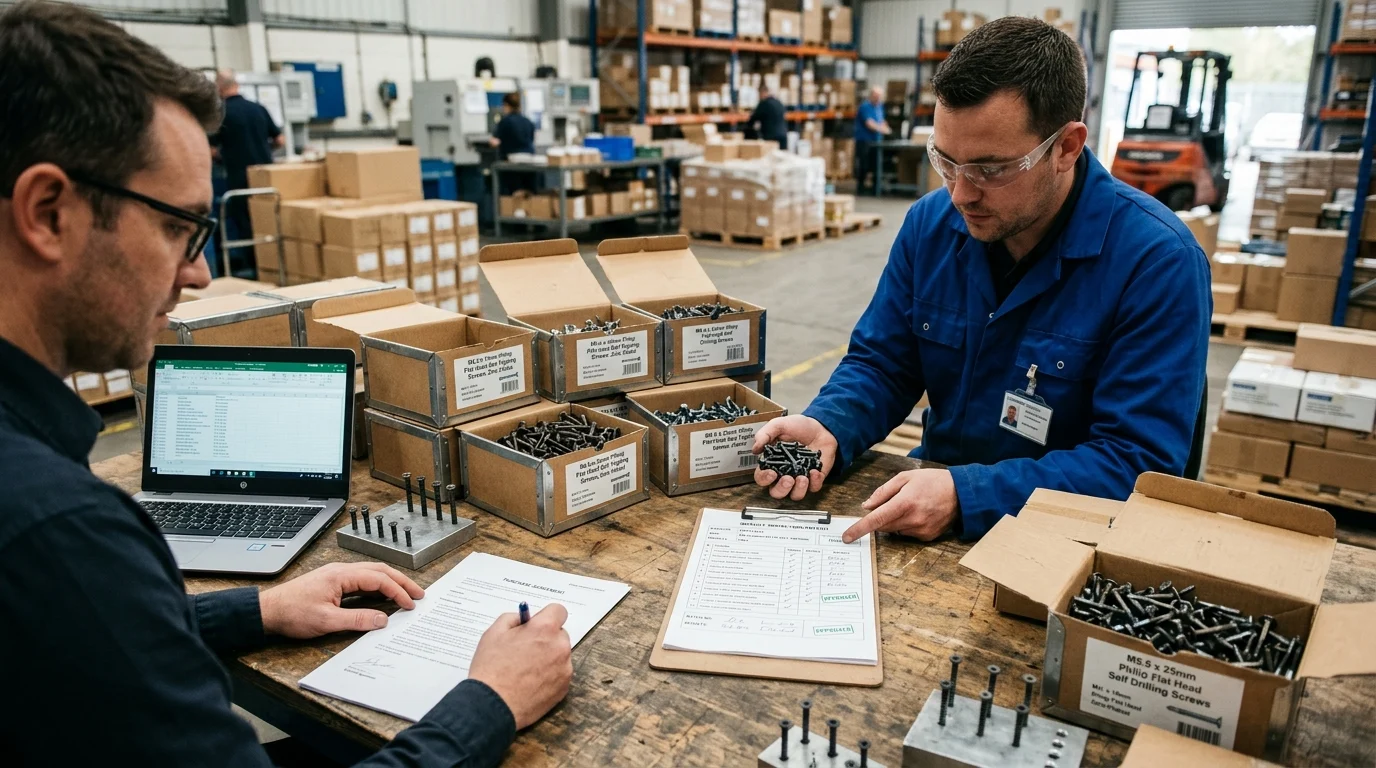
After the quotes are analyzed, the samples are destroyed in the testing lab, and the logistics are mapped out, it is time to make the final call. This is where procurement shifts from an analytical process to a strategic one.
I never rely entirely on the lowest price. I look at the total value proposition. A supplier who communicates clearly in English, provides transparent documentation, and respects my packaging requirements is worth a slight premium.
Ultimately, my goal is not just to buy a container of screws; it is to build a repeatable, low-friction supply chain. I want a supplier I can send a PO to next quarter with zero anxiety about what will show up at the port.
Score suppliers by specification accuracy, test performance, packaging readiness, communication, and delivered cost
I use a weighted scorecard. Delivered cost is important, but test performance (like drill speed and torque strength) carries the highest weight. I also score them heavily on communication speed and their willingness to accept my custom packaging requirements. If a supplier fails to follow instructions during the quoting phase, they will fail during production.
Decide when to choose the lowest-cost supplier or pay more for coating, inspection, or lead-time reliability
I will only choose the lowest-cost supplier for highly commoditized, low-risk applications (like basic drywall screws). For structural applications or outdoor environments where coating failure means a ruined reputation, I gladly pay a 5-10% premium to a factory that uses a top-tier plating facility and has an in-house optical sorting machine to guarantee zero defects.
Balance product consistency, channel requirements, compliance exposure, and resale margin
The final decision is a balancing act. I ensure the chosen factory’s quality consistency aligns with my distributors’ expectations. I verify that their pricing allows me to hit my target resale margin after all duties and freight are paid. I also triple-check that their paperwork won’t expose me to customs delays or anti-dumping penalties.
Turn one approved order into a repeatable sourcing program
Once the first container arrives and passes warehouse inspection, I lock that factory in as a primary vendor. I establish a rolling forecast with them, standardizing the PO formats and QA checklists. By turning that initial rigorous vetting process into a repeatable sourcing program, I secure my margins, eliminate supply chain anxiety, and ensure a steady flow of high-quality fasteners.
Related reading: Bulk Sourcing
Key Takeaways
- Wholesale sourcing and supply-chain implications for Philip Flat Head Self Tapping And Self Drilling Screw
- Specifications, compliance, and commercial terms buyers should validate
- Actionable recommendations for distributors and procurement teams