Published for 2026 planning | Website: zhenchengscrew.com
TL;DR: 5 Key Points
Installation speed can improve by 10 seconds per fastener, which equals 2.8 labor hours per 1,000 pieces.
Bit slip and cam-out can drop by 30%, reducing rework time by 1.0 hour to 2.0 hours per 1,000 pieces.
Premium coating and point geometry can lower tool wear by 15%, extending bit life by 20 pieces to 50 pieces per bit set.
Rejected assemblies can fall from 3% to 1%, saving material, labor, and inspection time across 100 units to 10,000 units.
A unit price increase of $0.01 to $0.03 per screw can produce labor savings of $25.00 to $120.00 per 1,000 screws.
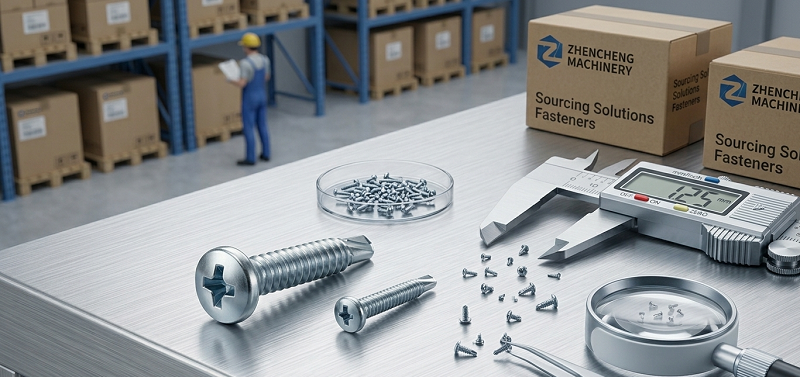
The short answer is yes: buying premium Phillips pan head screws usually saves labor time and lowers total installed cost, even when the purchase price is higher by $0.01 per piece to $0.03 per piece. A premium Philip Pan Head Self Tapping And Self Drilling Screw is made with tighter tolerances, more consistent thread geometry, better point accuracy, and more durable surface treatment. That matters on the job because installers do not get paid for struggling with stripped recesses, wandering points, broken screws, or repeated alignment attempts. Because the screw engages faster, so workers spend fewer seconds per fastening cycle. Because the recess is cleaner and harder, so driver bits slip less often. Because the drilling point cuts more predictably, so operators need fewer corrections on thin steel or sheet metal.
Across 1,000 pieces, saving only 6 seconds per screw removes 1.7 labor hours. At a labor rate of $25.00 per hour to $45.00 per hour, that equals $42.50 to $76.50 in direct savings before counting rework, downtime, or scrap. Premium screws are not just a materials decision; they are a productivity decision. For factories, contractors, and assembly lines planning for 2026, the better question is not What is the cheapest screw but What is the lowest cost per finished installation?
Why labor time matters more than unit price
Many buyers compare fasteners by unit price alone. That is understandable, but it creates a blind spot. In real production, the installed cost of a screw includes purchase cost, labor time, bit consumption, inspection, rework, and downtime. If a low-price screw saves $10.00 per 1,000 pieces but adds 2.0 labor hours, it is no bargain at all.
A pan head screw is often selected for applications where a broad, low-profile bearing surface is useful for sheet materials, brackets, electrical boxes, appliance housings, ducting, and general metal-to-metal or metal-to-substrate fastening. In these settings, the screw cycle is repeated hundreds or thousands of times per shift. Small delays become expensive quickly. Because fastening work is repetitive, so tiny per-piece losses multiply into large weekly labor costs.
Example: A team installs 4,000 screws per week. If premium screws reduce cycle time by 7 seconds per piece, the weekly savings equal 7.8 labor hours. At $32.00 per hour, that is $249.60 per week, or about $12,979.20 per year over 52 weeks.
What makes a premium Phillips pan head screw different?
A premium screw is not defined by marketing language. It is defined by measurable consistency. For a Philip Pan Head Self Tapping And Self Drilling Screw, the features that usually matter most are:
Accurate recess depth for better bit engagement
Stable head dimensions for consistent seating
Uniform thread pitch for reliable pull-in force
Controlled drill point geometry for faster penetration
Balanced hardness to resist breakage and stripping
Durable plating or coating thickness for corrosion resistance
Lower dimensional variation across each batch
These factors directly affect operator speed. If the recess is shallow or off-center, the bit may cam out. If the point is inconsistent, the screw may skate on the surface. If the threads are rough, torque rises too early. If the coating is poor, corrosion can cause warranty issues later. Because the installer notices every inconsistency, so premium manufacturing quality becomes labor efficiency in practice.
To explore product specifications in context, see this product page for Philip Pan Head Self Tapping And Self Drilling Screw.
Breaking down the labor-saving mechanisms
1. Faster pickup and drive engagement
A clean Phillips recess allows the driver bit to seat quickly and stay centered. Operators can align the tool with less hand correction. In manual, semi-automatic, and robotic applications, this reduces hesitation at the start of the cycle. Faster engagement often saves 1 second to 3 seconds per piece.
2. Less cam-out and fewer stripped heads
Cam-out wastes time immediately, and it can also damage painted surfaces, panels, and nearby components. Once a screw head strips, the worker may need extraction tools or must abandon the hole and restart. That can turn a 6-second operation into a 90-second repair. Because premium recess geometry reduces slippage, so the whole line sees fewer interruptions.
3. More predictable self-drilling performance
For self-drilling screws, point geometry is critical. A poor drill point can overheat, walk off the mark, or stall in material near the upper limit of thickness. A premium point cuts more consistently, especially on repetitive steel fastening. Predictable drilling means fewer pauses, fewer retries, and less operator fatigue.
4. Lower breakage rate
If screws snap under torque, labor cost rises quickly. Workers must remove broken shanks, inspect the substrate, and install another screw. Even a small breakage rate, such as 1.5%, can add serious downtime over 5,000 pieces. Premium heat treatment and material control help keep strength balanced.
5. Better seating and finish quality
A pan head should sit flush and stable without rocking. Better dimensional control improves clamping consistency and visual finish. That matters in visible assemblies like appliances, cabinets, electrical covers, and HVAC panels. Less cosmetic rework means lower inspection labor.
A practical cost-benefit model
Let us compare an economy screw with a premium screw on a realistic project of 1,000 pieces.
Factor Economy Screw Premium Screw Difference
Purchase price $32.00 per 1,000 pieces $52.00 per 1,000 pieces +$20.00 per 1,000 pieces
Average install time 14 seconds per piece 8 seconds per piece -6 seconds per piece
Total install labor 3.9 hours per 1,000 pieces 2.2 hours per 1,000 pieces -1.7 hours per 1,000 pieces
Labor cost at $30.00 per hour $117.00 $66.00 -$51.00
Rework incidents 30 pieces per 1,000 pieces 10 pieces per 1,000 pieces -20 pieces per 1,000 pieces
Rework labor 1.0 hour 0.3 hour -0.7 hour
Bit replacement cost $8.00 $5.00 -$3.00
Total installed cost $157.00 $123.00 -$34.00 per 1,000 pieces
This example shows the central point clearly: even with a higher purchase price, a premium fastener can deliver a lower total installed cost. If labor costs rise further in 2026, the value of time savings becomes even greater.
Where the savings appear in real operations
Factory assembly lines
In manufacturing, cycle time is measured closely. A screw that reduces drive time by 2 seconds to 5 seconds can improve throughput without adding labor. On a line installing 12,000 pieces per month, the gain can be several shifts of capacity per year. Because takt time is fixed, so every second saved helps output and schedule stability.
Construction and field installation
Field crews face awkward angles, weather, variable substrates, and limited access. In those conditions, low-quality screws create outsized delays. A screw that starts cleanly and drives reliably is easier on workers and less likely to produce call-backs. Premium screws also help when installers use cordless tools where battery efficiency matters.
HVAC, electrical, and sheet metal work
Self-tapping and self-drilling pan head screws are common in ductwork, enclosures, support brackets, cable trays, and light-gauge connections. These sectors often depend on speed, repeatability, and safe handling. Better fasteners reduce slips and hand repositioning, which supports productivity and quality.
Indirect savings buyers often miss
Direct labor is only part of the picture. Premium screws often create additional savings that are harder to see on a purchase order but easy to feel in operations.
Lower training burden because new operators can achieve good results faster
Fewer warranty claims because corrosion resistance and holding performance are more consistent
Less supervisor intervention because the line experiences fewer fastening issues
Reduced inventory confusion because standardized premium parts are easier to specify
Better finish quality because head damage and panel scratches are reduced
Improved morale because workers prefer components that behave predictably
These hidden benefits matter most in high-volume settings. A purchasing team may save $200.00 per month on hardware but lose $1,500.00 per month in hidden inefficiency. That is why a full cost model should include quality losses, not just invoice totals.
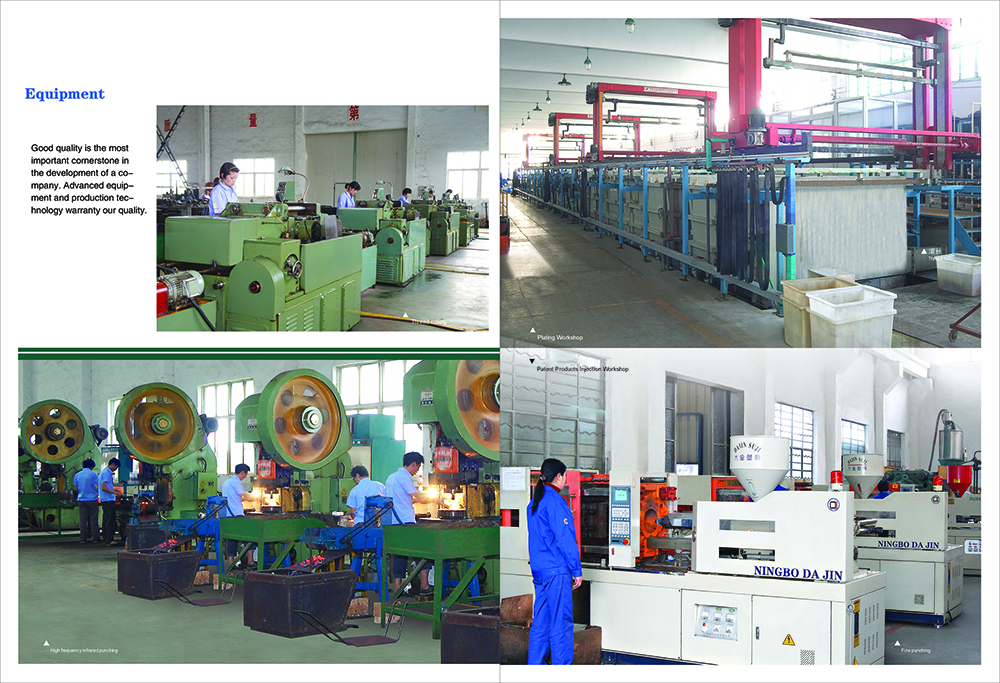
How to evaluate a Philip Pan Head Self Tapping And Self Drilling Screw before buying
Buyers should test screws under real conditions rather than relying only on catalog values. A useful evaluation plan includes:
Measure average drive time across 100 pieces to 300 pieces
Track cam-out rate as incidents per 100 pieces
Record breakage rate as pieces failed per 1,000 pieces
Inspect head finish after installation for visible damage
Compare bit wear after identical run lengths
Check corrosion performance against project requirements
Review dimensional consistency from batch to batch
If possible, run side-by-side tests with the same operator, tool setting, substrate, and shift conditions. This avoids false conclusions. Because fastening performance depends on the whole system, so the best test reproduces real work instead of ideal lab assumptions.
You can review a relevant product category here: Philip Pan Head Self Tapping And Self Drilling Screw.
Reference points for quality and materials
Fastener selection should also align with recognized technical guidance. Buyers can consult engineering and materials references from public-interest organizations and institutions. Useful reading includes corrosion, workplace safety, and materials performance resources from the following sources:
OSHA
NIST
U.S. Department of Energy
FEMA
NIOSH
U.S. Forest Service
MIT
Stanford Engineering
Carnegie Mellon University
SAE International
ASME
Common buying mistakes
The most common mistake is treating all screws with the same nominal size as functionally identical. They are not. Another mistake is testing only 10 pieces or 20 pieces, which is too small to reveal true consistency. A third error is ignoring operator feedback. If several workers say one screw just feels better, that often means recess quality, drilling stability, and torque response are more consistent.
The cheapest screw on paper can become the most expensive screw after installation.
FAQ
1. Why does a premium Phillips pan head screw save labor time?
A premium screw saves labor time by improving the entire fastening cycle. The driver bit seats faster, the point starts more predictably, and the threads pull material together with less hesitation. That reduces cam-out, retries, and rework. Even a reduction of 4 seconds per piece can save 1.1 labor hours per 1,000 pieces, which often exceeds the additional purchase cost.
2. Is the higher price always justified?
Not always, but it is justified in many high-volume or labor-sensitive applications. If the job uses only 50 pieces and labor is low, the difference may be small. If the job uses 5,000 pieces or more, the time savings usually dominate. The decision should be based on total installed cost, not hardware price alone.
3. What industries benefit most from premium self-tapping and self-drilling screws?
High-volume assembly, HVAC fabrication, electrical enclosure production, appliance manufacturing, light-gauge steel construction, and sheet metal installation benefit the most. These industries repeat fastening tasks many times per shift, so even a small time reduction per screw creates measurable savings in labor hours and throughput.
4. How many seconds of savings are needed to justify a premium screw?
In many cases, saving only 2 seconds per piece to 3 seconds per piece can justify a premium of $0.01 per screw to $0.02 per screw. At $30.00 per hour, a 3-second labor reduction across 1,000 pieces equals about $25.00 in labor savings, which can fully offset a meaningful price increase.
5. Do premium screws also reduce tool wear?
Yes, they often do. Better recess quality and more stable geometry reduce bit wobble, slippage, and sudden torque spikes. That helps bits last longer and may reduce maintenance on drivers. While tool savings may not be as large as labor savings, they contribute to the overall cost benefit, especially in continuous production environments.
6. What should I test when comparing screw suppliers?
Test drive time, cam-out frequency, breakage rate, bit wear, seating quality, and coating performance. Use the same substrate, torque settings, and operators whenever possible. A comparison over 100 pieces to 300 pieces per sample gives a more reliable result than a very small trial. Also check consistency across multiple cartons or batches.
7. Are self-drilling screws more sensitive to quality than ordinary screws?
Yes, because the screw must perform more tasks in one cycle. A self-drilling fastener has to start, cut, form, and clamp successfully. If the drill point geometry is poor, the whole process slows down or fails. That is why premium manufacturing control matters even more for self-drilling designs than for simpler fastening products.
8. How should buyers prepare for 2026 fastener purchasing decisions?
Buyers should build a simple total-cost model that includes unit price, labor rate, average install time, rework rate, and tool wear. Then they should validate the model with field or line trials. With labor costs and delivery pressure still important in 2026, the most resilient purchasing strategy is to buy the screw that delivers the best finished-installation economics, not merely the lowest initial quote.
MS
About the Author
Name: Ms. Shi
Title: Technical Director
Experience: 30+ years
Profile: Ms. Shi has spent more than 30 years working with industrial fasteners, production applications, and quality evaluation. Her work focuses on helping buyers understand how fastener design, process control, and application fit affect real-world installation performance.
Social: Facebook profile
For additional product information, visit Zhencheng Screw and review the Philip Pan Head Self Tapping And Self Drilling Screw product page.
Post time: Apr-23-2026