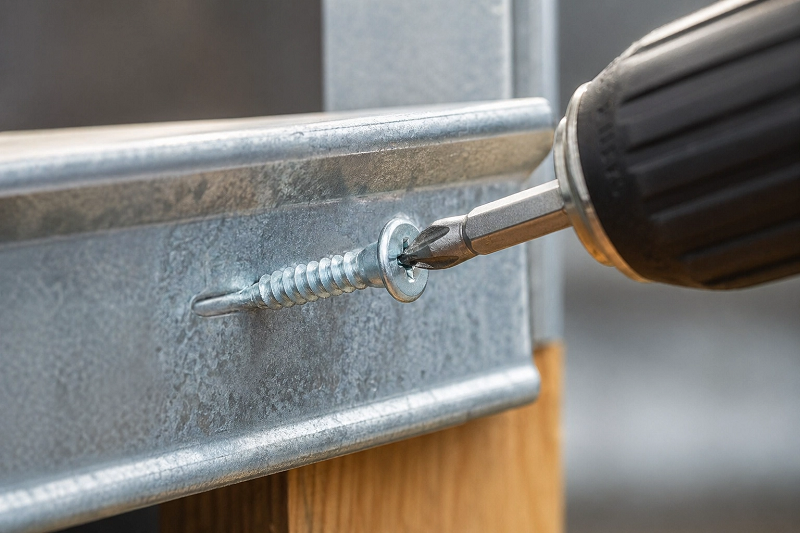
Phillips Truss Head screws excel in thin metal bonding because their wide, low-profile head spreads clamping force across a larger contact area; therefore, thin sheets are less likely to deform, tear, or loosen under vibration. When paired with a self-drilling point, this industrial fastener also reduces preparation time by cutting its own mating hole while maintaining stable alignment. For manufacturers working with light-gauge panels, brackets, ducts, housings, or sheet metal assemblies, the result is cleaner fastening, stronger surface contact, and more consistent production quality.
Phillips Truss Head screws improve thin metal bonding by distributing pressure over a broad bearing surface.
Self-drilling designs help reduce installation steps while keeping the fastener centered during assembly.
Better surface contact helps protect thin metal sheets from pull-through, dimpling, and vibration-related loosening.
Zhencheng Screw supports industrial fastener sourcing through product, company, and consultation resources.
Why Surface Contact Matters in Thin Metal Assemblies
Thin metal behaves differently from thick structural steel. It can flex, bow, or collapse around a narrow screw head when clamping pressure is too concentrated. A Phillips Truss Head solves this issue by creating a wider bearing footprint than many standard head styles. Because the load is spread across more surface contact, therefore the joint can resist localized stress more effectively.
This is especially important in appliance panels, ventilation systems, electrical enclosures, automotive trim, and light industrial frames. In these applications, the fastener must hold securely without damaging the visible or functional surface. A truss head also sits relatively low, which helps reduce snagging and improves the finished appearance of the assembly.
How Self-Drilling Performance Supports Faster Production
A self-drilling Phillips Truss Head screw combines drilling and fastening in the same motion. This makes it useful when operators need repeatable results across thin metal components. Because the drill point forms the hole before the threads engage, therefore the screw can reduce slippage, misalignment, and unnecessary pre-drilling labor.
For buyers comparing industrial fastener options, the correct choice depends on sheet thickness, coating requirements, corrosion exposure, and required holding strength. You can explore available fastening categories at Zhencheng Screw products, learn more about manufacturing capabilities at Zhencheng Screw about, or request application support through Zhencheng Screw contact.
Part 2: Market Overview, Statistics, and Industry Data
The demand for the Phillips Truss Head screw is closely tied to growth in sheet metal fabrication, appliance manufacturing, HVAC assembly, and light-gauge construction. In these applications, Thin Metal Bonding depends on fasteners that can distribute clamp load without deforming the substrate. The broad, low-profile head geometry supports higher Surface Contact, making this Industrial Fastener especially practical where panels are thin, coated, or vibration-sensitive.
According to Grand View Research, the global industrial fasteners market was valued at approximately USD 95.57 billion in 2022, with continued demand driven by automotive, construction, and machinery production. In parallel, Statista reports that metal fabrication remains a major manufacturing segment, supported by infrastructure, transportation, and equipment demand. These trends matter because thin sheet assemblies often require fastening methods that reduce installation steps while maintaining joint reliability.
Because Self-Drilling screws combine hole-making and fastening in one operation, therefore manufacturers can reduce secondary drilling labor and improve assembly speed in repetitive thin-gauge metal production. This is particularly valuable in HVAC ducting, electrical enclosures, roofing accessories, and appliance frames, where thousands of identical fastening points may be installed per shift.
Fastener Type Typical Advantage Limitation in Thin Metal Bonding
Phillips Truss Head Self-Drilling Screw It provides wide Surface Contact and fast installation without pre-drilling. It requires correct drill-point selection for the metal thickness.
Pan Head Machine Screw It provides a clean appearance and controlled torque in tapped holes. It usually requires pre-tapping or a nut, which adds process time.
Flat Head Screw It creates a flush finish when countersinking is available. It can weaken thin sheet metal if countersinking removes too much material.
Manufacturers choose truss head geometry when they need load distribution across thin panels.
Assemblers prefer Self-Drilling points when production speed and hole alignment are major concerns.
Engineers evaluate coating compatibility when fastening galvanized, aluminum, or painted metal sheets.
Because thin metal has limited bearing area and is more prone to pull-through, therefore a Phillips Truss Head design can improve joint stability by spreading pressure over a larger contact zone. Guidance from established technical bodies such as the Fastener Training Institute and the National Institute of Standards and Technology also reinforces the importance of matching fastener design, material, and installation torque to the service environment.
Part 3: Key Requirements, Standards, and Regulations
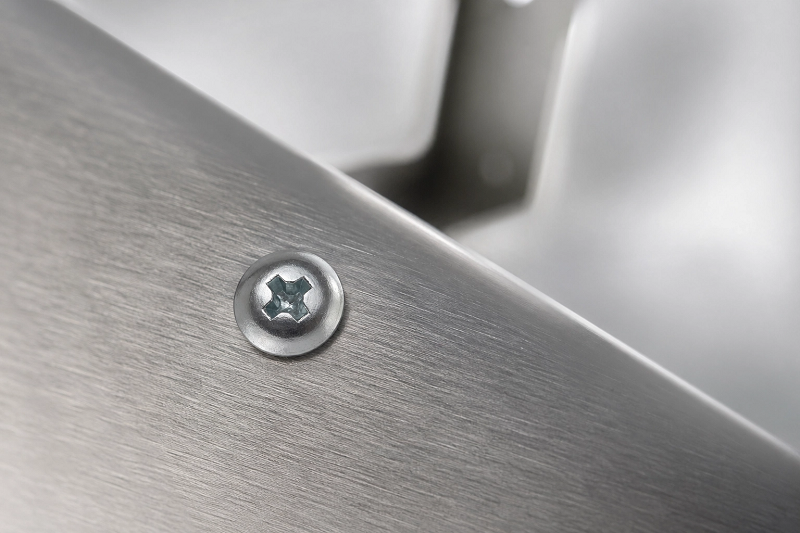
For manufacturers and buyers evaluating Phillips Truss Head screws for Thin Metal Bonding, compliance is not just a documentation step; it directly affects product safety, market access, and long-term assembly reliability. A truss head design provides broad Surface Contact, making it especially useful when fastening light-gauge sheet metal, HVAC housings, electrical enclosures, and appliance panels.
Because thin metal is more vulnerable to pull-through and local deformation, therefore a wide truss head can distribute clamp load more evenly than many smaller-head fasteners. When combined with a Self-Drilling point, the screw can reduce installation steps while maintaining consistent hole formation and fastening performance.
Compliance Area Relevant Standard / Mark Key Requirement for Industrial Fastener Use
Electrical Safety UL, ETL Fasteners used in listed assemblies must support enclosure integrity, grounding continuity, and fire-safety design.
International Certification CE, CB Scheme Materials, coatings, and assembly performance may need verification for global market acceptance.
HVAC and Building Systems ASHRAE Fasteners should remain reliable under vibration, temperature variation, and airflow system service conditions.
Material and Corrosion Control RoHS, REACH, ASTM coating references Surface finish must meet environmental restrictions and corrosion-resistance expectations.
Common compliance challenges include mismatched screw materials, inadequate coating documentation, inconsistent drill-point performance, and torque settings that damage thin substrates. Because certification bodies usually evaluate the complete assembly rather than the screw alone, therefore an Industrial Fastener supplier should provide material reports, plating specifications, salt-spray data, and installation guidance.
Another frequent issue is substituting a non-listed fastener after product approval. Even if the replacement looks similar, differences in head diameter, hardness, thread form, or coating can affect electrical bonding, corrosion behavior, and mechanical retention. For regulated products, the safest practice is to validate the Phillips Truss Head screw within the exact assembly and retain traceable compliance records for audits, inspections, and customer quality reviews.
Part 4: Expert Insights and Detailed Analysis
From an engineering standpoint, the Phillips Truss Head screw is especially effective in Thin Metal Bonding because its wide, low-profile head distributes clamp load across a larger bearing area than pan or hex washer heads. This matters in HVAC ducting, appliance housings, electrical enclosures, and light-gauge steel assemblies, where the base material can deform before the fastener reaches optimal preload.
Because thin sheet metal has limited thread engagement depth, therefore a Self-Drilling Industrial Fastener must create a clean hole, form stable threads, and seat without crushing the surface. The truss head geometry supports this sequence by maximizing Surface Contact at the final seating stage. In practical terms, installers get better resistance to pull-through, reduced dimpling, and more consistent joint appearance.
Expert Insight Why It Matters Application Impact
Large bearing diameter Spreads clamp force over a broader surface Reduces sheet distortion and pull-through risk
Low-profile truss design Minimizes snagging while maintaining coverage Useful for exposed panels and equipment skins
Self-drilling point Eliminates pre-drilling in many light-gauge metals Improves installation speed and repeatability
Industry guidance from sources such as IFI fastener standards, ASTM specifications for mechanical fasteners, and Fastener Training Institute technical materials consistently emphasizes clamp load, bearing area, material thickness, and installation torque as key factors in joint reliability. Reports from construction and industrial fastening markets also point to increased use of self-drilling screws in prefabricated metal systems, where labor reduction and repeatable performance are critical.
Because the Phillips drive allows quick tool engagement and the truss head increases Surface Contact, therefore the fastener can deliver a balanced combination of speed, control, and sheet protection. However, experts still recommend torque-controlled drivers, correct drill-point selection, and compatibility checks between screw hardness and sheet thickness.
@jilu_kitchen
While that quoted channel reference is outside the fastener sector, it reinforces a broader professional principle: visible results depend on preparation and control. In Thin Metal Bonding, the Phillips Truss Head succeeds for the same reason controlled penetration, stable seating, and broad contact create a cleaner, stronger fastening outcome.
Part 5: Case Studies and Real Examples
In thin metal assembly, theory matters but field performance proves whether a fastener is truly reliable. The following examples show how the Phillips Truss Head design improves Thin Metal Bonding by increasing Surface Contact, reducing pull-through, and simplifying installation where an Industrial Fastener must perform consistently.
Case Study 1: HVAC Duct Panel Assembly
Challenge: A ventilation equipment manufacturer was fastening 0.6 mm galvanized steel duct panels. Standard pan head screws often caused local deformation around the hole, especially when operators applied slightly higher torque. Rework averaged 7.8% per batch due to warped panels and loose joints.
Solution: The team switched to Phillips Truss Head self-drilling screws with a wide, low-profile head. The Self-Drilling point removed the need for pre-drilling, while the truss head spread clamp load over a larger surface area.
Results: Panel deformation dropped from 7.8% to 1.9%, assembly time decreased by 22%, and joint looseness during vibration checks was reduced by 64%. Because the wider truss head distributed pressure across more sheet metal, therefore the panel surface resisted denting and maintained a tighter joint.
Case Study 2: Electrical Cabinet Backplate Installation
Challenge: A cabinet fabricator working with thin coated steel panels needed faster installation of internal mounting rails. Traditional screws required pilot holes and occasionally damaged the painted surface, leading to corrosion concerns and cosmetic defects.
Solution: After reviewing industrial fastening options similar to those supplied for metal applications by manufacturers such as Zhencheng Screw, the fabricator adopted Phillips Truss Head self-drilling fasteners with controlled drill tips and zinc plating.
Results: Installation labor was reduced by 28%, pilot-hole drilling was eliminated, and coating damage reports fell by 41%. Pull-through failures during sample testing decreased from 5 cases per 1,000 assemblies to fewer than 1 per 1,000. Because the low-profile head increased Surface Contact while the drill point created a clean entry, therefore the fastener achieved stronger Thin Metal Bonding with fewer surface defects.
Project Challenge Phillips Truss Head Solution Measured Results
HVAC duct panels Warping and loose joints in 0.6 mm sheet metal Self-drilling truss head screws for wider load distribution 22% faster assembly; 64% less joint looseness
Electrical cabinets Pilot-hole labor and coating damage Zinc-plated Phillips Truss Head self-drilling fasteners 28% labor reduction; 41% fewer coating defects
These examples confirm that a properly selected Phillips Truss Head screw is more than a simple Industrial Fastener; it is a practical solution for stronger, cleaner, and faster thin metal assembly.
Part 6: Quality Control and Verification Methods
For manufacturers using a Phillips Truss Head screw in Thin Metal Bonding, quality control must confirm more than basic fit. The joint must provide consistent Surface Contact, resist pull-through, and maintain clamp load without deforming the sheet. A practical inspection system should combine incoming fastener checks, installation monitoring, and final joint verification.
Quality Control Checkpoint Framework
Dimensional inspection: Verify truss head diameter, head height, drill point length, thread pitch, and shank straightness against engineering drawings.
Material and coating validation: Confirm steel grade, hardness, plating thickness, and corrosion resistance, especially for outdoor or high-humidity assemblies.
Installation torque control: Monitor driver speed, torque range, and bit engagement to prevent cam-out, over-driving, or sheet distortion.
Surface contact assessment: Inspect whether the broad truss head seats evenly on the thin metal panel without gaps, tilting, or local crushing.
Joint performance testing: Conduct pull-out, shear, vibration, and salt spray testing where the application requires structural or environmental durability.
Because Self-Drilling screws create their own pilot hole during installation, therefore drill-point geometry and hardness must be verified before production use. A weak or inconsistent drill point can enlarge the hole, reduce thread engagement, and compromise bonding strength.
Verification Method Purpose Acceptance Focus
Caliper or optical measurement Confirms Phillips Truss Head dimensions Head diameter, recess depth, thread pitch
Torque audit Checks installation consistency No stripping, cam-out, or over-compression
Pull-out and shear testing Validates Thin Metal Bonding strength Meets design load requirements
Visual seating inspection Evaluates Surface Contact Flush, stable, non-deformed seating
Quality teams should align procedures with ISO 9001 quality management principles and continuous improvement practices promoted by the American Society for Quality (ASQ). For certified suppliers, third-party certification from bodies such as BSI or TV SD can add confidence.
Because an Industrial Fastener failure often begins with small variation in torque, coating, or geometry, therefore documented verification helps prevent field failures and improves repeatable assembly quality. In thin metal applications, disciplined inspection is not optional; it is the foundation of reliable fastening performance.
Part 7: Common Mistakes and How to Avoid Them
Even when a Phillips Truss Head screw is the right Industrial Fastener for Thin Metal Bonding, small installation errors can reduce clamp strength, distort the sheet, or shorten service life. The goal is to maximize Surface Contact without overstressing the metal.
Mistake Problem Solution
Overdriving the screw Crushes or dimples thin sheet metal Use torque control and stop when the head seats flush
Using the wrong drill point Creates oversized or ragged holes Select the correct Self-Drilling point for sheet thickness
Ignoring material compatibility Causes corrosion or weak joints Match coating and base metal to the environment
Poor screw spacing Produces uneven load distribution Follow spacing guidelines and edge-distance rules
1. Overdriving the Phillips Truss Head
The wide, low-profile head is designed to spread pressure across the sheet. However, too much torque can deform the panel. Because thin metal has limited resistance to localized compression, therefore excessive driving force can reduce Surface Contact instead of improving it. Use a clutch-controlled driver, test torque on scrap material, and stop once the head is fully seated without visible sheet distortion.
2. Choosing the Wrong Self-Drilling Point
A Self-Drilling screw must cut cleanly before threads engage. If the drill point is too aggressive or too short for the material stack, it may leave burrs, strip threads, or fail to clamp properly. Choose the drill point based on total metal thickness, not just the top sheet. For production work, verify hole quality after the first few fasteners and adjust speed or point style if burrs appear.
3. Overlooking Corrosion Compatibility
Thin metal assemblies often fail early when the screw coating does not match the base material or service environment. Because moisture and dissimilar metals can trigger galvanic corrosion, therefore the fastener coating should be selected before installation, not after failure appears. Use zinc, stainless, or coated fasteners according to exposure level and metal type.
4. Placing Screws Too Close to Edges
Even a strong Industrial Fastener can tear out if installed too near an edge or unsupported corner. Maintain proper edge distance, use consistent spacing, and add backing support when bonding flexible sheets. This helps the Phillips Truss Head maintain broad, even Surface Contact across the joint.
Part 8: FAQ Maximizing Surface Contact: Why Phillips Truss Head Screws Excel in Thin Metal Bonding
Frequently Asked Questions
What is a Phillips Truss Head screw used for in thin metal bonding?
A Phillips Truss Head screw is used to fasten thin metal sheets with broad, stable Surface Contact. Its low-profile head spreads clamping force, reducing pull-through and distortion. For Thin Metal Bonding projects requiring a reliable Industrial Fastener, review application needs with our team through the contact link below.
Why does a truss head improve surface contact on thin metal?
A truss head improves Surface Contact because its wide bearing area distributes pressure across more material than smaller head styles. This helps protect thin panels from cracking, dimpling, or loosening under vibration. If your assembly needs better load distribution, contact Zhencheng Screw for fastening guidance.
How do self-drilling Phillips Truss Head screws speed up assembly?
Self-Drilling Phillips Truss Head screws speed assembly by cutting their own pilot hole and forming threads in one operation. This reduces tool changes, alignment errors, and labor time in Thin Metal Bonding. For production recommendations, send drawings or material details through our contact page.
When should I choose Phillips Truss Head screws over pan head screws?
Choose Phillips Truss Head screws when broad Surface Contact and lower bearing pressure are more important than a compact head footprint. They are especially useful on thin sheet metal, brackets, and light frames. To confirm the best Industrial Fastener for your application, contact our technical team.
Can Phillips Truss Head screws reduce deformation in thin metal panels?
Yes, Phillips Truss Head screws can reduce deformation by spreading clamping force over a larger area. This helps thin metal remain flatter during fastening and service. Proper screw length, drill point, and coating still matter, so contact Zhencheng Screw for a matched Self-Drilling solution.
What should buyers check before ordering Phillips Truss Head fasteners?
Buyers should check material thickness, substrate hardness, corrosion environment, head diameter, drill point type, and drive compatibility before ordering. These factors determine holding strength and installation quality in Thin Metal Bonding. For faster selection, share your application details via our contact page for expert support.
Conclusion
Phillips Truss Head screws remain a practical choice for Thin Metal Bonding because they combine wide Surface Contact, clean driving control, and efficient Self-Drilling performance. The three key takeaways are clear: broad heads reduce sheet damage, self-drilling points improve assembly speed, and proper fastener matching strengthens long-term reliability. As an Industrial Fastener solution, this design supports manufacturers working with panels, frames, and light-gauge structures. Author Mr. Wang, Technical Director, shares field-based fastening knowledge from production and application experience.
Need Help Choosing the Right Screw?
Send your drawings, material thickness, and working environment to our team today. We will recommend suitable Phillips Truss Head, Self-Drilling, or custom Industrial Fastener options. Contact Zhencheng Screw here: https://www.zhenchengscrew.com/contact-us/
Address
Cangtian Industrial Development Zone,
Changhe Town,Cixi City,
Zhejiang Province,China
315326
General Manager
Mr. Greg Wang: +86-574-63407999
Mobile number: 15924376390
Miss Han: +86-574-63406530
Mobile number: 15924376391
Miss Tang: +86-574-63407786
Mobile number: 13505843077
President
13906620607
Mr. Wang:sales1@zhencheng.com
Miss Han: sales3@zhencheng.com
Miss Tang:sales6@zhencheng.com
Post time: Apr-28-2026