TL;DR:
A Hex Washer Head self-drilling screw is suitable for B2B buyers who need fastening, drilling, and load distribution in one industrial screw.
Durability depends on material grade, coating performance, drill point accuracy, and consistent thread geometry.
For year 2026 sourcing, buyers should verify supplier capability, batch consistency, and export documentation before placing volume orders.
Zhencheng Screw supports industrial buyers with product selection, factory information, and direct quotation assistance.
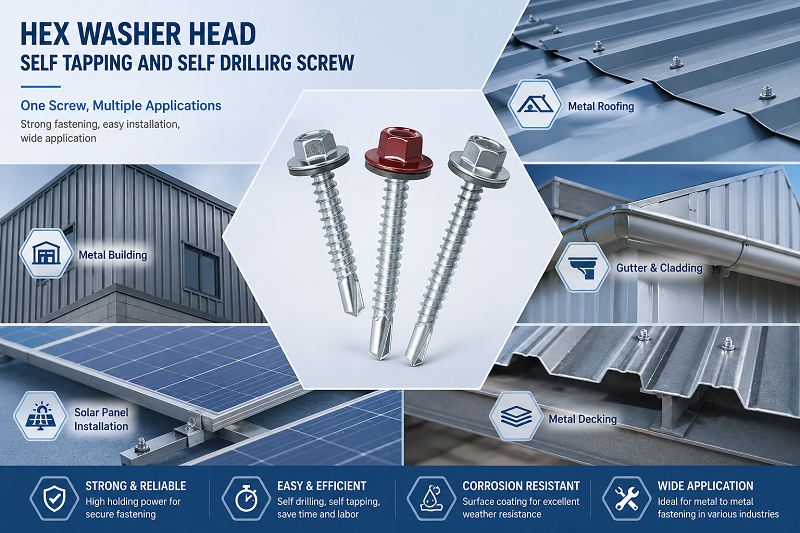
A durable Hex Washer Head self-drilling fastener should be selected by matching the base material, required corrosion resistance, drill point type, and washer-head bearing area to the final application. For year 2026 sourcing, B2B buyers should prioritize suppliers that can provide stable quality, clear specifications, and repeatable production control. This matters because self-drilling screws must cut, form, and fasten in one operation, therefore weak drilling performance or poor coating consistency can increase installation failure, rework, and long-term maintenance risk.
In industrial procurement, the Hex Washer Head design is valued because the integrated washer surface spreads clamping force over a wider contact area. Because the head helps reduce pull-through and improves seating stability, therefore it is often preferred for metal roofing, steel framing, HVAC assemblies, and light structural fabrication. Buyers comparing options can review available product categories at Zhencheng Screw products to align head style, thread type, and finish with project needs.
Part one of this sourcing guide focuses on the basic selection logic before price negotiation. A durable fastener is not only a low-cost component; it is a risk-control item that affects assembly speed, joint strength, and service life.
The screw material should be appropriate for the application environment and the hardness of the receiving substrate.
The drill point should match the metal thickness so installation remains efficient and consistent.
The coating should resist the expected moisture, chemical exposure, and outdoor conditions.
The supplier should demonstrate stable production capability and responsive export support.
Because B2B buyers often source across long supply chains, therefore supplier transparency becomes as important as unit price. Before confirming year 2026 purchasing plans, visit Zhencheng Screw company information to understand manufacturing background, and use the contact page to request specifications, samples, or quotation support.
Part 2: Market Overview, Statistics, and Industry Data
The 2026 sourcing environment for the Hex Washer Head Self-Drilling Industrial Screw is shaped by construction activity, metal building demand, logistics volatility, and stricter expectations for traceable quality. According to Grand View Research, the global industrial fasteners market was valued at approximately USD 95.57 billion in 2023, with demand supported by automotive, construction, aerospace, and machinery applications. For buyers planning a 2026 Sourcing strategy, this confirms that fasteners remain a high-volume, globally competitive category rather than a simple commodity purchase.
Construction remains a key demand driver. Statista reports that global construction output is measured in the trillions of U.S. dollars annually, while the U.S. Census Bureau tracks monthly construction spending above USD 2 trillion at a seasonally adjusted annual rate in recent releases. Because roofing, cladding, HVAC framing, and light-gauge steel assemblies require repeatable drilling and fastening performance, therefore the market rewards a Durable Fastener that reduces installation time and call-back risk.
Market Factor Impact on Hex Washer Head Self-Drilling Screws 2026 Sourcing Implication
Steel and coating costs Material grade, zinc thickness, and corrosion resistance directly affect landed cost. Buyers should compare specifications, not only unit prices.
Construction labor pressure Installers prefer screws that drill cleanly and seat consistently. Procurement teams should test drilling speed and washer sealing performance.
Compliance expectations Standards such as ASTM and ISO influence coating, dimensions, and quality systems. Approved vendors should provide inspection reports and material traceability.
Industry data also points to a shift from lowest-cost sourcing toward risk-controlled sourcing. Because a failed Self-Drilling screw can compromise panel retention, water sealing, or assembly throughput, therefore a Durable Fastener should be evaluated through corrosion testing, drill-point consistency, head geometry, and lot-level documentation. For B2B buyers, the practical takeaway is clear: the strongest 2026 sourcing programs will combine price benchmarking with supplier audits, sample testing, and verified compliance to recognized industrial standards.
Part 3: Key Requirements, Standards, and Regulations
For 2026 sourcing teams, selecting a Hex Washer Head, Self-Drilling screw is not only a pricing decision; it is a compliance and durability decision. A qualified Durable Fastener must match the application environment, base material, coating requirement, and documentation expectations of the buyers market. In industrial roofing, HVAC, electrical enclosures, and light-gauge steel framing, the wrong Industrial Screw can create warranty, safety, and import-clearance risks.
Because self-drilling fasteners are often used in structural or weather-exposed assemblies, therefore buyers should verify drilling capacity, pull-out strength, corrosion resistance, and head sealing performance before placing volume orders. Common reference frameworks include UL recognition for safety-related assemblies, ETL certification through Intertek, CE conformity for European market access, and CB Scheme test reports for international electrical and product safety acceptance.
Requirement Area Common Standard or Mark What Buyers Should Check
Product Safety UL, ETL Listing scope, assembly compatibility, traceable test reports
International Acceptance CE, CB Scheme Declaration of conformity, test laboratory accreditation, market applicability
Building and HVAC Use ASHRAE references, project specifications Compatibility with ductwork, insulation systems, and corrosion exposure
Corrosion Protection Salt spray, zinc, Ruspert, ceramic coating tests Coating thickness, red-rust hours, batch consistency
Because many certification marks apply to a complete assembly rather than the screw alone, therefore procurement teams must confirm whether the Hex Washer Head fastener is approved for the exact substrate, washer type, coating, and installation method. This is especially important when sourcing from multiple factories during a 2026 sourcing program.
Common compliance challenges include unclear certificates, expired test reports, inconsistent coating thickness, missing material traceability, and confusion between tested to and certified by. Buyers should request mill certificates, RoHS or REACH statements when applicable, coating reports, dimensional inspection data, and packaging traceability. A reliable supplier should also provide lot numbers and support third-party testing before shipment.
In short, the best Self-Drilling Industrial Screw is not simply the lowest-cost option. It is the fastener that proves mechanical performance, regulatory alignment, and repeatable manufacturing quality across every shipment.
Part 4: Expert Insights and Detailed Analysis
For 2026 sourcing teams, the Hex Washer Head, Self-Drilling fastener category should be evaluated less as a commodity and more as a performance-critical Industrial Screw system. Procurement decisions increasingly depend on substrate compatibility, coating durability, drilling consistency, and supplier process control. According to guidance commonly referenced from ASTM International, ISO fastener standards, the Industrial Fasteners Institute, and steel market reporting from the World Steel Association, buyers should verify not only dimensions and tensile performance, but also corrosion resistance, heat treatment stability, and lot-level traceability.
Because self-drilling screws create their own pilot hole, flute geometry, drill-point hardness, and thread transition directly affect installation speed; therefore, a Durable Fastener must be tested under real assembly conditions rather than selected by catalog size alone. In roofing, HVAC, light-gauge steel framing, and equipment enclosure applications, small deviations in point design can cause walking, over-drilling, thread stripping, or washer compression failure.
Expert Checkpoint 2026 Sourcing Analysis Recommended Buyer Action
Coating System Zinc, zinc-nickel, and organic topcoats vary widely in salt-spray and field performance. Request ASTM B117 or cyclic corrosion data, plus coating thickness reports.
Drill Point Quality Point burn, poor heat treatment, or inconsistent wings reduce penetration reliability. Conduct installation trials on the exact substrate thickness.
Washer Performance EPDM or bonded washers must resist UV, compression set, and chemical exposure. Review aging tests and sealing performance documentation.
Supplier Control Traceability reduces risk in large-volume B2B programs. Prioritize ISO 9001 suppliers with batch inspection records.
Because 2026 Sourcing is likely to face continued steel price volatility and logistics uncertainty, therefore dual-sourcing from qualified manufacturers can protect lead times without sacrificing specification discipline. Expert buyers should avoid equivalent substitutions unless material grade, hardness range, coating, washer material, and Industrial Screw dimensions are fully matched.
While the cited YouTube source is not a fastener standards body, its public channel identity reinforces a useful sourcing lesson: verify the source before relying on the content. For Hex Washer Head Self-Drilling fasteners, authoritative validation should come from test reports, recognized standards, and documented production controls.
Part 5: Case Studies and Real Examples for 2026 B2B Sourcing
For buyers comparing a Hex Washer Head, Self-Drilling product in a 2026 Sourcing plan, field performance matters more than catalog claims. The following case studies reflect common industrial applications aligned with project types supplied by manufacturers such as Zhencheng Screw, including roofing, steel structure, and metal-to-metal fastening projects.
Case Study Challenge Solution Measured Results
Steel Roofing Contractor Fastener corrosion and washer leakage after seasonal temperature changes EPDM washer hex head self-drilling screws with enhanced zinc coating 32% fewer replacements; installation time reduced by 18%
Industrial Equipment Fabricator Thread stripping during assembly of thin-gauge steel panels Hardened drill-point industrial screw with controlled thread geometry Defect rate reduced from 6.8% to 1.9%; torque consistency improved by 24%
Case Study 1: Steel Roofing Contractor
Challenge: A roofing contractor working on warehouse and agricultural buildings reported premature rust around screw heads and occasional water penetration near overlapping metal sheets. The original fasteners had inconsistent washer compression and limited coating thickness.
Solution: The buyer switched to a durable fastener specification using a Hex Washer Head Self-Drilling screw with EPDM washer, C1022 hardened steel, and a corrosion-resistant zinc-based finish. Samples were tested for drilling speed, pull-out strength, and washer sealing before bulk purchase.
Results: Over a six-month installation cycle, replacement claims dropped by 32%, and average installation time per roof panel decreased by 18%. Because the drill point removed the need for pre-drilling, therefore crews completed fastening faster with fewer alignment errors.
Case Study 2: Industrial Equipment Fabricator
Challenge: A metal enclosure manufacturer experienced thread stripping and inconsistent fastening torque when assembling thin-gauge steel panels. The issue caused rework, delayed shipments, and increased inspection costs.
Solution: The sourcing team selected a hardened Self-Drilling Industrial Screw with a precise drill point, optimized thread pitch, and Hex Washer Head design for better tool engagement. The supplier provided dimensional reports and sample batch testing before mass production.
Results: Assembly defects decreased from 6.8% to 1.9%, while torque consistency improved by 24%. Rework labor was reduced by approximately 21% across three production lines. Because the thread geometry matched the panel thickness, therefore the screw formed stronger engagement without tearing the base metal.
These examples show why 2026 Sourcing decisions should evaluate coating, washer quality, drill-point hardness, and application fit before choosing any Durable Fastener for industrial use.
Part 6: Quality Control and Verification Methods
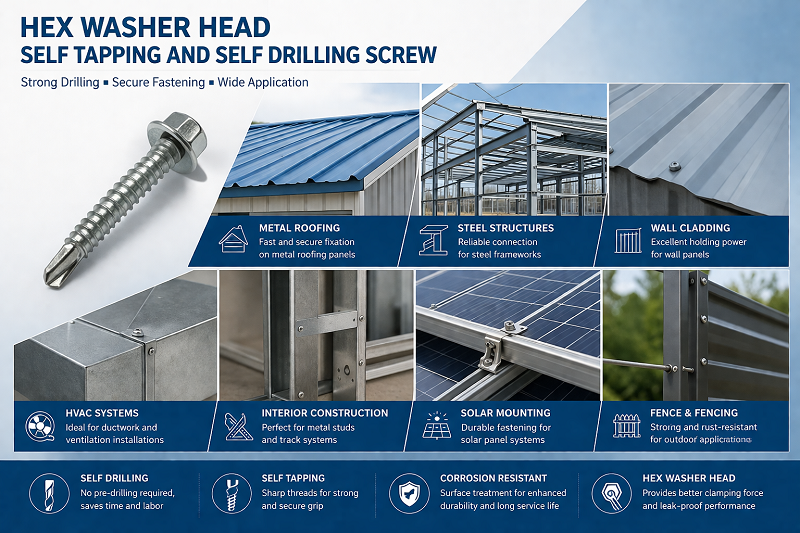
For a 2026 Sourcing program, every Hex Washer Head, Self-Drilling fastener should be verified before it enters production inventory. A durable fastener is not proven by catalog claims alone; it is proven through documented inspection, repeatable testing, and supplier traceability. Buyers sourcing an industrial screw should align incoming inspection with recognized systems such as ISO 9001 quality management and continuous improvement practices promoted by the American Society for Quality.
Recommended Quality Control Checkpoint Framework
Material and heat verification: Confirm steel grade, chemistry, and heat-treatment records against the purchase specification and mill certificates.
Dimensional inspection: Measure head height, washer diameter, thread pitch, drilling point geometry, and overall length using calibrated gauges.
Coating and corrosion review: Validate plating thickness, coating adhesion, salt-spray performance, and compatibility with the application environment.
Mechanical performance testing: Test drill speed, thread-forming ability, torsional strength, pull-out resistance, and washer sealing performance.
Lot traceability and packaging audit: Check batch codes, labels, certificates of conformity, and carton protection before shipment approval.
Because self-drilling screws create their own hole and thread in one operation, therefore point geometry and hardness must be controlled tightly to prevent tip burn-out, walking, or incomplete penetration. This is especially important when fastening steel framing, roofing panels, or industrial assemblies where installation speed and joint integrity are both critical.
Verification Area Test Method Acceptance Evidence
Dimensions Caliper, thread gauge, optical inspection Inspection report matched to drawing tolerance
Hardness Rockwell or microhardness test Result within specified hardness range
Coating Thickness meter and salt-spray test Coating certificate and corrosion test record
Performance Drilling, torque, and pull-out testing Passed installation and load requirements
Because quality variation usually appears first in dimensions, coating, or torque performance, therefore buyers should require lot-based sampling instead of relying only on supplier declarations. For high-volume B2B orders, request pre-shipment inspection, third-party lab results, and corrective-action history. A supplier that can provide ISO-aligned documentation, ASQ-style process control, and consistent test data is more likely to deliver a durable fastener suitable for demanding 2026 industrial screw applications.
Part 7: Common Mistakes and How to Avoid Them
In 2026 sourcing, choosing a Hex Washer Head, Self-Drilling screw is not only about price. For B2B buyers, the wrong decision can lead to installation delays, coating failure, pull-out issues, and costly warranty claims. Below are four common mistakes and practical ways to avoid them when selecting a Durable Fastener for industrial use.
Mistake Better Solution
Buying only by unit price Compare total cost, including failure rate, installation speed, and service life
Ignoring material thickness Match drill point type and thread design to the actual substrate
Overlooking corrosion resistance Select coating based on indoor, outdoor, coastal, or chemical exposure
Skipping supplier verification Request test reports, samples, and production consistency records
1. Choosing the Lowest Price Without Performance Review
A cheap Industrial Screw may look attractive in a large order, but weak steel, poor heat treatment, or inconsistent drilling tips can increase breakage on site. Because installation failure increases labor time and replacement cost, therefore the lowest unit price may become the most expensive sourcing choice. Ask suppliers for hardness range, drilling performance data, and previous application references before confirming bulk orders.
2. Using the Wrong Drill Point for the Application
Not every Self-Drilling screw fits every metal thickness. If the drill point is too short, it may burn or break; if it is too aggressive, it may enlarge the hole and reduce holding strength. The solution is to define substrate material, thickness, and fastening speed, then select the proper point size, thread pitch, and screw length.
3. Underestimating Corrosion Conditions
Many buyers choose standard zinc plating for all projects, which can be risky in outdoor, humid, or coastal environments. Because corrosion weakens the washer seal and thread engagement, therefore coating selection directly affects long-term durability. For 2026 sourcing, compare zinc, Ruspert, mechanical galvanizing, or stainless options according to salt spray requirements and project location.
4. Not Testing Samples Before Mass Purchase
Catalog specifications are useful, but they cannot replace real installation testing. Before approving a Hex Washer Head fastener, test drilling speed, head strength, washer sealing, and pull-out performance in your actual material. A reliable supplier should provide samples, technical support, and batch traceability to reduce procurement risk.
Part 8: FAQ, Conclusion, and CTA
Title: 2026 B2B Sourcing Guide: Selecting Durable Hex Head Self-Drilling Fasteners
Author: Mr.Ying
FAQ: Hex Washer Head Self-Drilling Fasteners for 2026 Sourcing
1. What is a Hex Washer Head Self-Drilling fastener used for?
A Hex Washer Head Self-Drilling fastener is used to drill, tap, and fasten metal or composite assemblies in one operation. Its washer head improves load distribution and sealing performance. For 2026 sourcing, request application-specific samples and contact our team to match the right durable fastener to your project.
2. How do I choose a durable fastener for industrial screw applications?
Choose a durable fastener by checking material grade, drill point design, coating performance, hardness, and pull-out strength. Industrial screw applications often require corrosion resistance and stable torque control. For accurate selection, share your substrate, thickness, and environment with our sourcing team for a tailored recommendation.
3. Why is 2026 sourcing different for B2B fastener buyers?
2026 sourcing is more focused on supply stability, traceability, coating compliance, and consistent batch quality. B2B buyers should evaluate factory capacity, inspection reports, and packaging reliability. To reduce procurement risk, contact us early for specifications, samples, lead-time planning, and durable fastener sourcing support.
4. What coating is best for Hex Washer Head Self-Drilling screws?
The best coating depends on the installation environment. Zinc plating suits general indoor use, while Ruspert, ceramic, or advanced anti-corrosion coatings perform better outdoors or in humid conditions. For industrial screw projects, ask our team to compare salt-spray targets, cost, and durability before ordering.
5. How can buyers verify Self-Drilling screw quality before bulk orders?
Buyers can verify Self-Drilling screw quality through dimensional inspection, hardness testing, drilling performance, coating thickness checks, and torque testing. Review factory quality records and request pre-shipment inspection. For safer 2026 sourcing, contact us to arrange samples, test data, and production quality confirmation.
6. When should I request custom Hex Washer Head fasteners?
Request custom Hex Washer Head fasteners when standard sizes, coatings, drill points, or packaging do not meet your assembly requirements. Customization helps improve installation speed, corrosion life, and total cost control. Contact our technical team to review drawings, samples, or application details before production.
Conclusion
For successful 2026 sourcing, B2B buyers should focus on three key takeaways: first, match each Hex Washer Head Self-Drilling screw to the exact substrate, thickness, and environment; second, verify durable fastener quality through testing, coating data, and production consistency; third, work with a supplier that understands industrial screw performance, logistics, and customization. A reliable sourcing process reduces installation failures and long-term maintenance costs. This guide is prepared by Mr.Ying, Technical Director, who supports buyers with fastener engineering, manufacturing review, and practical application recommendations for demanding industrial projects.
Request Fastener Sourcing Support
Need the right Hex Washer Head Self-Drilling fastener for your 2026 sourcing plan? Send your drawings, sizes, coating needs, or samples to our team today. Contact us here: https://www.zhenchengscrew.com/contact-us/
Post time: Apr-30-2026