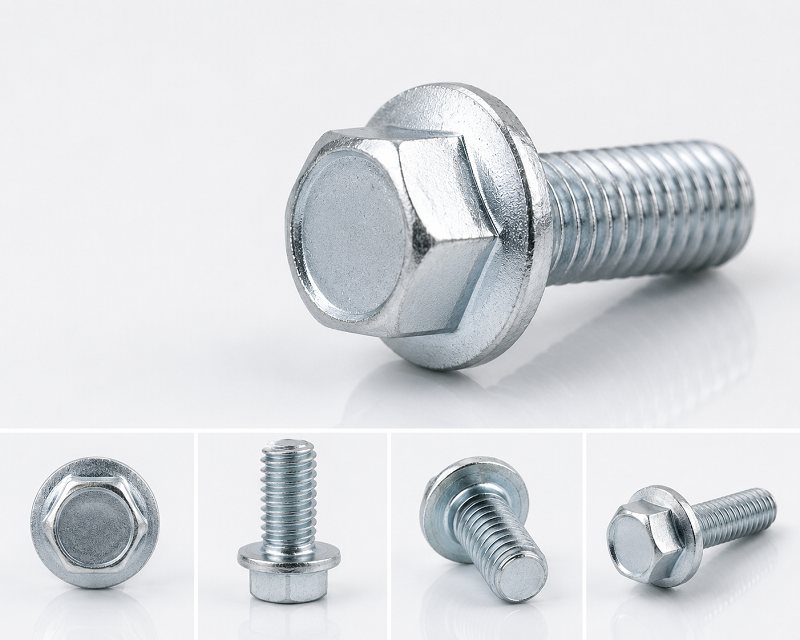
- Your supplier is meeting quality benchmarks only if every Hex Washer Head order is backed by traceable inspection data.
- Self-Drilling performance must be verified through material hardness, coating thickness, and drilling consistency checks.
- B2B Compliance requires documented standards, stable production controls, and export-ready packaging.
- A strong Supplier Evaluation should compare certificates, test reports, delivery reliability, and corrective-action processes.
Your current Hex Washer Head supplier is meeting international quality benchmarks only when it can prove consistent material control, dimensional accuracy, corrosion resistance, and documented B2B Compliance across every shipment. If your supplier cannot provide inspection records, coating reports, hardness data, and batch traceability, the answer is likely no. International buyers should not rely on product appearance alone, because fasteners used in roofing, steel framing, and industrial assembly must perform under load, vibration, and weather exposure. A qualified supplier should make verification simple, not difficult, before you place repeat orders.
For importers, contractors, and distributors, the main risk is not one defective screw; it is an unstable supply chain. Because Hex Washer Head fasteners are often installed in large-volume structural or enclosure applications, therefore a small quality variation can become a project-wide failure risk. This is why Supplier Evaluation should begin before pricing discussions are finalized.
A reliable assessment should include several practical checks. First, your supplier should confirm which international standards guide production and inspection. Second, your supplier should explain how Self-Drilling points are tested for drilling speed, point strength, and thread engagement. Third, your supplier should provide clear records for coating performance, especially when products are used outdoors or in humid environments.
You can also review whether the manufacturer has a stable factory system, experienced export team, and visible product range. Buyers may start by checking the available fastener categories on the products page, then reviewing company capability through the about page. Because supplier transparency reduces uncertainty during procurement, therefore documented factory information supports stronger B2B Compliance decisions.
In Part 1, the key takeaway is simple: do not treat Hex Washer Head sourcing as a price-only decision. Quality Benchmarks must be proven through data, process control, and responsive communication. If your current supplier cannot answer technical questions clearly, it may be time to contact a qualified manufacturer for a more reliable evaluation.
Part 2: Market Overview, Statistics, and Industry Data
The global fastener market is expanding as construction, solar mounting, HVAC, automotive, and light-gauge steel framing projects demand faster installation and verified performance. According to Grand View Research, the global industrial fasteners market was valued at approximately USD 95.57 billion in 2023 and is projected to grow at a 4.1% CAGR from 2024 to 2030. This growth directly affects Hex Washer Head sourcing, especially for Self-Drilling applications where drilling speed, coating consistency, and head geometry influence installation cost.
Industry demand is also shaped by trade and infrastructure activity. Statista reports that global revenue in the screws, nuts, and bolts segment is expected to reach USD 94.56 billion in 2024. For B2B buyers, this means Supplier Evaluation should not focus only on unit price. It should also examine dimensional tolerance, corrosion resistance, documentation control, and B2B Compliance readiness.
Because international buyers face tighter project specifications and customs documentation requirements, therefore suppliers that cannot provide test reports, coating data, and traceability records create procurement risk. Standards from organizations such as ISO, ASTM International, and Fastener Training Institute are increasingly used as reference points for Quality Benchmarks.
| Market Factor | Impact on Hex Washer Head Buyers | Supplier Evaluation Priority |
|---|---|---|
| Growth in construction and metal building systems. | Buyers need stable supply for Self-Drilling fasteners used in steel-to-steel and panel fastening. | Suppliers should prove monthly capacity, lead-time control, and packaging consistency. |
| Higher corrosion-performance expectations. | Projects require coatings suitable for outdoor, coastal, or humid environments. | Suppliers should provide salt spray test data and coating thickness records. |
| More formal B2B Compliance requirements. | Importers need documents that support audits, customs clearance, and customer approval. | Suppliers should offer material certificates, inspection reports, and traceable batch numbers. |
- Procurement teams should compare suppliers by verified performance data rather than catalog claims alone.
- Engineering teams should confirm that Hex Washer Head dimensions match the intended driver, washer diameter, and sealing requirement.
- Quality teams should require consistent inspection records before approving a long-term Self-Drilling fastener supplier.
Because fastener failure can stop installation, damage panels, or trigger warranty claims, therefore a supplier that meets recognized Quality Benchmarks delivers measurable value beyond the purchase price. In today’s market, the strongest suppliers are not simply manufacturers; they are compliance partners that help buyers reduce technical, commercial, and regulatory risk.
Part 3: Key Requirements, Standards, and Regulations
When conducting Supplier Evaluation for a Hex Washer Head or Self-Drilling fastener program, international Quality Benchmarks should be checked before price negotiation. In B2B procurement, compliance is not only a certificate issue; it affects installation safety, project approval, warranty claims, and cross-border shipment clearance.
Key references often include UL for product safety validation, ETL by Intertek for North American market acceptance, CE marking for European conformity, and the CB Scheme for international electrical product recognition. For building-related applications, buyers may also review energy and ventilation-related guidance from ASHRAE, especially when fasteners are used in HVAC, roofing, enclosure, or equipment assembly systems.
| Standard or Mark | Main Focus | Supplier Evidence to Request |
|---|---|---|
| UL | Safety, fire resistance, component reliability | UL file number, test report, authorized listing |
| ETL | North American safety compliance | Intertek certificate, factory audit record |
| CE | EU conformity and market access | Declaration of Conformity, technical file |
| CB Scheme | International test report recognition | CB test certificate and report |
Common compliance challenges include outdated certificates, mismatched material grades, coating thickness deviations, unclear traceability, and test reports that do not match the exact Hex Washer Head specification. Because a Self-Drilling screw may be exposed to vibration, moisture, and structural load, therefore the supplier must prove hardness, drilling capacity, corrosion resistance, and washer sealing performance with current data.
Another frequent risk is assuming one certificate covers all product variations. Because changes in diameter, thread design, washer material, or surface treatment can alter performance, therefore buyers should require batch-level documentation, not only a general company certificate. A reliable supplier should provide inspection plans, RoHS or REACH statements when applicable, salt spray results, mechanical test data, and full traceability from raw material to shipment.
For B2B Compliance, the best practice is to build a checklist covering standards, market destination, application environment, packaging labels, and third-party verification. This reduces approval delays and helps confirm whether your current supplier truly meets international quality expectations.
Part 4: Expert Insights and Detailed Analysis
For B2B buyers, the question is no longer whether a Hex Washer Head fastener “looks acceptable,” but whether the supplier can prove repeatable performance against international Quality Benchmarks. In expert supplier evaluation, documentation is as important as the product itself: ISO 9001 quality systems, ASTM/SAE dimensional conformity, RoHS/REACH declarations, coating test reports, and batch-level traceability should all be reviewed before approval.
Industry references such as ISO 9001:2015, ASTM F1667, SAE J78, ISO 9227 salt spray testing, and EU REACH/RoHS frameworks indicate that fastener quality must be controlled across material chemistry, thread forming, drill-point geometry, washer bonding, corrosion resistance, and packaging integrity. This is especially critical for Self-Drilling screws, where drilling speed, pull-out strength, and point hardness directly affect installation reliability.
| Expert Checkpoint | What to Verify | B2B Compliance Impact |
|---|---|---|
| Material Certification | Steel grade, hardness, heat-treatment records | Reduces structural and warranty risk |
| Coating Performance | Salt spray hours, zinc or ceramic coating reports | Supports export and outdoor-use claims |
| Dimensional Control | Head height, washer diameter, drill point accuracy | Improves installation consistency |
| Traceability | Lot number, inspection report, production date | Enables faster corrective action |
Because international buyers face project liability, import inspection, and customer audit pressure, therefore supplier evaluation must include both factory capability and evidence-based compliance. A supplier that cannot provide consistent test data may still deliver usable screws, but not necessarily reliable B2B compliance.
Another expert warning is to avoid judging quality by price alone. Because Hex Washer Head self-drilling screws combine fastening, sealing, and drilling functions in one component, therefore a small defect in washer adhesion or drill-point hardness can create installation failures across thousands of assemblies.
Part 5: Case Studies and Real Examples
When asking, “Is your current hex head supplier meeting international quality benchmarks?”, real purchasing outcomes matter more than catalog claims. Below are two B2B examples, aligned with common project requirements seen in international fastener supply, including Hex Washer Head screws, Self-Drilling applications, Supplier Evaluation, and B2B Compliance expectations. Manufacturers such as Zhencheng Screw, referenced at https://www.zhenchengscrew.com/, typically support projects involving roofing, steel framing, and industrial assembly where quality consistency is critical.
Case Study 1: Roofing Contractor Reduces Installation Failures
Challenge: A commercial roofing contractor was using Hex Washer Head Self-Drilling screws from a low-cost supplier. During installation, workers reported drill-point breakage, washer misalignment, and inconsistent zinc coating. The defect rate reached 4.8%, causing rework and delayed handover.
Solution: The buyer introduced a stricter Supplier Evaluation process, requiring dimensional inspection reports, salt spray test data, torque testing, and batch traceability. The replacement supplier provided screws with stable drill-point hardness, EPDM washer consistency, and packaging labels matched to lot numbers.
Results: Within three project cycles, field defect rates dropped from 4.8% to 0.9%. Installation speed improved by 18%, and rework costs were reduced by approximately 32%. Because the supplier controlled hardness, coating thickness, and washer fit, therefore the roofing team achieved fewer failures and more predictable installation quality.
Case Study 2: Steel Frame Distributor Improves Compliance Approval
Challenge: A steel frame distributor exporting to multiple markets needed Hex Washer Head Self-Drilling screws that met customer documentation requirements. Previous shipments lacked complete inspection records, creating B2B Compliance risks and customs delays.
Solution: The distributor shifted to a supplier capable of providing pre-shipment inspection, material certificates, coating reports, and carton-level traceability. Samples were tested for pull-out strength, drilling performance, and corrosion resistance before bulk approval.
Results: Compliance document approval time decreased from 10 working days to 3 working days. Customer claims fell by 41% over six months, while repeat orders increased by 27%. Because the supplier delivered consistent documentation and verified product performance, therefore the distributor reduced approval delays and strengthened buyer confidence.
| Case Study | Main Challenge | Supplier Action | Measured Result |
|---|---|---|---|
| Roofing Contractor | 4.8% installation defect rate | Torque, coating, washer, and traceability checks | Defects reduced to 0.9%; rework cost down 32% |
| Steel Frame Distributor | Incomplete B2B Compliance records | Certificates, inspection reports, and batch tracking | Approval time cut from 10 days to 3 days |
These examples show why Quality Benchmarks should be built into supplier selection, not reviewed only after problems appear.
Part 6: Quality Control and Verification Methods
Is Your Current Hex Head Supplier Meeting International Quality Benchmarks?
For B2B buyers sourcing Hex Washer Head fasteners, especially Self-Drilling screws, supplier quality cannot be judged by price alone. A reliable Supplier Evaluation process should confirm whether production, inspection, and documentation align with recognized Quality Benchmarks such as ISO-based management systems and ASQ quality principles.
Use the following 4-point quality control checkpoint framework when auditing or comparing suppliers:
- Material Traceability: Verify steel grade, coating type, heat number, and supplier batch records.
- Dimensional Accuracy: Check head diameter, washer profile, thread length, drill point geometry, and tolerances against drawings.
- Mechanical Performance: Test drilling speed, pull-out strength, torsional resistance, and corrosion protection.
- B2B Compliance Documentation: Confirm inspection reports, certificates of conformity, RoHS/REACH declarations where applicable, and shipment-level traceability.
Because Self-Drilling Hex Washer Head screws must cut, fasten, and seal in one operation, therefore drill point consistency and washer-head formation must be inspected together, not as separate visual checks. A screw may look acceptable but still fail during installation if hardness, point shape, or coating thickness is inconsistent.
| Verification Item | Recommended Method | Benchmark Reference |
|---|---|---|
| Material and coating | Mill certificate review, coating thickness test, salt spray test | ISO quality system documentation |
| Thread and head dimensions | Caliper, thread gauge, optical inspection | Approved engineering drawing |
| Drilling and torque performance | Application simulation, torque test, failure analysis | ASQ sampling and process control principles |
| Batch compliance | Final inspection report and certificate of conformity | B2B Compliance requirements |
Because international buyers depend on repeatable batch performance, therefore a qualified supplier should provide statistical inspection records, not only one-time approval samples. This is where standards from organizations such as ISO and quality guidance from ASQ become important during supplier audits.
Before confirming a long-term order, request recent inspection data, calibration records, corrective action history, and third-party certification where available. Strong quality control reduces installation failure, protects project timelines, and helps ensure your Hex Washer Head supplier is truly meeting international Quality Benchmarks.
Part 7: Common Mistakes and How to Avoid Them
When evaluating whether your current hex head supplier meets international Quality Benchmarks, small oversights can lead to costly B2B compliance risks. For buyers sourcing Hex Washer Head and Self-Drilling fasteners, the following mistakes are especially common during Supplier Evaluation.
1. Relying Only on Price Instead of Total Quality Cost
The problem is that many buyers choose the lowest quotation without checking material consistency, coating performance, or dimensional accuracy. This often results in installation failures, corrosion claims, or project delays. Because a low unit price can hide higher rejection and replacement costs, therefore procurement teams should calculate total cost, not just purchase price.
Solution: Request full specifications, including steel grade, coating thickness, drill-point performance, salt spray test results, and packaging standards. Compare suppliers based on defect rate, delivery reliability, and documentation quality.
2. Skipping Certification and Test Report Verification
Some buyers accept certificates at face value without verifying whether they match the actual batch supplied. This creates a serious B2B Compliance gap, especially for projects requiring ISO, ASTM, DIN, or customer-specific standards.
Solution: Ask for batch-linked mill test certificates, coating reports, hardness test data, and inspection records. Cross-check certificate numbers with shipment labels and purchase orders before approval.
| Mistake | Risk | Actionable Solution |
|---|---|---|
| Choosing by lowest price | Higher hidden failure costs | Evaluate total quality cost and defect history |
| Not verifying reports | Non-compliance with international standards | Check batch-linked certificates and test data |
| Ignoring application fit | Poor drilling or fastening performance | Test samples under real installation conditions |
3. Not Testing Fasteners in Real Application Conditions
A Self-Drilling fastener may look acceptable on paper but fail when used with specific steel thickness, roofing panels, or structural substrates. Drill speed, washer sealing, thread engagement, and head strength must match the application.
Solution: Conduct sample trials before bulk orders. Test drilling time, pull-out strength, washer compression, and corrosion resistance in the same environment where the product will be used.
4. Failing to Audit the Supplier’s Process Control
Buyers sometimes inspect only finished goods, ignoring how the supplier controls heading, threading, heat treatment, and surface coating. Because process instability creates inconsistent Hex Washer Head quality, therefore supplier audits should review production controls, not only final inspection reports.
Solution: Use a structured Supplier Evaluation checklist covering raw material traceability, in-process inspection, calibration records, corrective actions, and export documentation. This helps confirm whether the supplier can meet ongoing international Quality Benchmarks.
Part 8: FAQ — Is Your Current Hex Head Supplier Meeting International Quality Benchmarks?
What quality benchmarks should a Hex Washer Head supplier meet?
A qualified Hex Washer Head supplier should meet ISO-based production control, consistent dimensional tolerance, reliable coating performance, and documented inspection standards. For Self-Drilling applications, drill point hardness and thread accuracy matter most. If these records are missing, request a formal Supplier Evaluation or contact us for compliance support.
How can B2B buyers verify Self-Drilling screw quality before ordering?
Yes, buyers can verify Self-Drilling screw quality by requesting material certificates, salt spray reports, hardness testing data, and batch inspection records. Samples should also be tested on real substrates. For stronger B2B Compliance, ask your supplier for documented test results or contact us for a technical review.
Why does Supplier Evaluation matter for international fastener procurement?
Supplier Evaluation matters because it reduces risks in quality, delivery, traceability, and regulatory compliance. International buyers need predictable Hex Washer Head performance across repeated orders, not just one approved sample. A structured evaluation helps confirm factory capability, process control, and B2B Compliance. Contact us to compare your current supplier.
When should a company replace its Hex Washer Head supplier?
A company should consider replacing its Hex Washer Head supplier when defects repeat, documentation is incomplete, coatings fail early, or shipment consistency declines. These problems show weak Quality Benchmarks and poor process control. Before switching, complete a Supplier Evaluation and contact us for guidance on qualified Self-Drilling alternatives.
Can documentation prove compliance for Hex Washer Head products?
Yes, documentation can prove compliance when it includes material source records, production inspection reports, coating test data, and shipment traceability. However, documents must match actual product performance. For B2B Compliance, buyers should audit both paperwork and samples. Contact us if you need help checking supplier records.
What is the fastest way to improve fastener purchasing confidence?
The fastest way is to build a checklist covering Hex Washer Head dimensions, Self-Drilling performance, coating durability, packaging, traceability, and supplier response speed. This turns Quality Benchmarks into measurable purchasing standards. If your current process lacks structure, contact us to start a practical Supplier Evaluation.
Conclusion
Three key takeaways matter for international buyers: first, Hex Washer Head quality must be measured by repeatable data, not visual approval alone. Second, Supplier Evaluation should include Self-Drilling performance, coating reliability, traceability, and B2B Compliance documents. Third, reliable suppliers help protect project schedules, installation safety, and long-term procurement costs. If your current supplier cannot provide transparent Quality Benchmarks, it may be time to reassess. This article is written by Mr. Ying, Technical Director, who focuses on fastener application performance, production control, and practical sourcing standards for global industrial buyers.
Need a Supplier Quality Review?
Send your current Hex Washer Head specifications, drawings, or inspection concerns to our technical team. We will help review quality risks, compliance needs, and sourcing options. Start here: contact Zhencheng Screw.
Contact Mr. Ying for expert guidance: https://www.zhenchengscrew.com//contact/
Post time: May-11-2026