TL;DR
- Point Precision determines how cleanly a screw starts, cuts, and seats during installation.
- Buyers often miss this Procurement Factor because they focus on visible Technical Specs instead of tip geometry.
- Self-Tapping performance depends on the point, therefore small defects can increase strip-out, wobble, and rework.
- Reliable sourcing starts with asking suppliers for consistent testing, drawings, and production support, such as the teams at our products page, about us, and contact page.
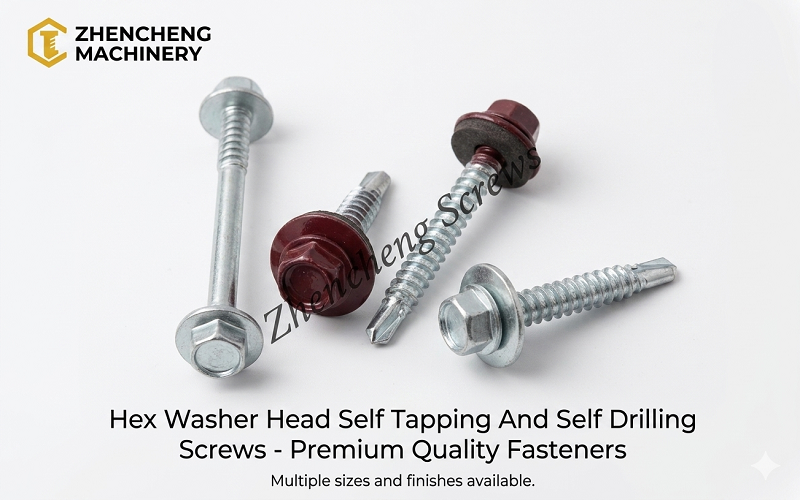
Point Precision is the most overlooked factor in Hex Washer Head screw procurement because it controls how the fastener begins its work, not just how it looks on a drawing. Buyers often compare diameter, length, finish, and head style, but the point decides whether the screw enters material smoothly, cuts cleanly, and reaches torque consistently. Because the point is the first contact with the substrate, even a small variation can cause drifting, poor thread formation, or damaged panels; therefore a screw that seems correct on paper can fail during real assembly. In Self-Tapping applications, that difference becomes even more important.
For procurement teams, this means Point Precision is not a minor detail. It is a Technical Specs issue, a cost issue, and a quality issue at the same time. A poorly formed tip can slow installation, increase operator fatigue, and raise scrap rates. A precise point, on the other hand, supports stable feeding and predictable engagement. Because production efficiency depends on repeatable starting performance, therefore point geometry should be treated as a core Procurement Factor instead of an afterthought.
If you are sourcing fasteners for demanding applications, it helps to review both product options and supplier capability. You can explore our fastener products, learn more on our company page, or contact our team for support on specification matching.
Market Overview: Why Point Precision Still Gets Missed
The hex fastener market is large, specification-driven, and increasingly global. Grand View Research valued the industrial fasteners market at USD 90.57 billion in 2023, and Statista projects continued expansion through the decade as construction, automotive, and machinery demand rises (Grand View Research, Statista). In that environment, buyers often focus on finish, thread pitch, and Hex Washer Head dimensions, yet Point Precision can decide whether a Self-Tapping screw cuts cleanly or stalls in production. Because procurement teams compare line-item pricing before installation performance, therefore the true cost of a weak point profile is often hidden until downtime or scrap appears.
| Point type | Typical performance | Procurement risk |
|---|---|---|
| Precision-cut point | It starts faster and reduces breakout variation in controlled substrates. | It lowers installation waste and supports tighter Technical Specs. |
| Standard point | It works in many jobs, but it may require more torque and operator attention. | It can increase variability across shifts and batches. |
| Blunt or inconsistent point | It is more likely to wander, gall, or strip during entry. | It raises rejection rates and can distort supplier comparisons. |
The procurement lesson is simple: because point geometry changes insertion force, chip formation, and thread initiation, therefore it should be evaluated as a core Procurement Factor rather than a cosmetic detail. Technical standards from ASTM International and measurement guidance from NIST reinforce this logic by tying repeatability to measurable specifications, not assumptions. In practice, suppliers that document point angle, tip sharpness, and substrate compatibility are easier to qualify, especially for Self-Tapping programs with tight cycle-time targets.
Part 3: Key Requirements, Standards, and Regulations
When a Hex Washer Head screw is specified for metal framing, HVAC housings, electrical cabinets, or appliance assemblies, Point Precision becomes a critical Procurement Factor, not just a machining detail. The point geometry controls how consistently a Self-Tapping screw drills, forms threads, and seats under load. If this detail is missing from the Technical Specs, buyers may receive visually similar screws that perform very differently in production.
Compliance usually depends on the final product category, but fasteners can directly affect certification outcomes. Relevant frameworks may include UL safety requirements, ETL certification by Intertek, CE conformity for the European market, and the CB Scheme for international electrical product acceptance. HVAC-related assemblies may also reference performance expectations from ASHRAE, especially where vibration, airflow equipment, or enclosure durability is involved.
| Requirement Area | Why Point Precision Matters | Procurement Check |
|---|---|---|
| UL / ETL Safety Review | Improper point shape may reduce thread engagement or damage sheet metal. | Request drawings, material certificates, and torque test data. |
| CE / CB Scheme Documentation | Fastener inconsistency can affect enclosure integrity and repeatability. | Confirm batch traceability and dimensional inspection reports. |
| Self-Tapping Performance | Point angle and tip concentricity influence drilling speed and stripping risk. | Define point type, pilot-hole condition, and substrate thickness. |
Because certification bodies evaluate the safety and consistency of the assembled product, therefore an unverified screw point can become a hidden compliance risk. Common challenges include suppliers substituting similar-looking parts, incomplete test records, mixed heat-treatment batches, and unclear coating specifications that affect tapping torque.
Because Point Precision affects installation torque, pull-out strength, and joint repeatability, therefore procurement teams should include point geometry, hardness range, coating, test method, and acceptance tolerance in the purchasing specification. For high-volume programs, incoming inspection should include tip profile measurement, drive fit checks, salt-spray records where required, and assembly-line torque validation. Treating point detail as a controlled parameter helps prevent audit failures, production scrap, and costly recertification delays.
Part 4: Expert Insights and Detailed Analysis
Why is Point Precision the Most Overlooked Factor in Hex Head Screw Procurement?
In fastener sourcing, buyers often prioritize coating, price, drive style, or head geometry, while Point Precision is treated as a minor line item. Yet for a Hex Washer Head screw, especially in Self-Tapping applications, the point is the first feature to interact with the substrate. If it is poorly formed, the entire fastening process becomes unstable before torque control or clamp load even matters.
Industry references such as ISO 1478 for tapping screws, ASME B18 fastener standards, and technical guidance from the Industrial Fasteners Institute consistently show that thread-forming performance depends on tip geometry, thread start accuracy, and dimensional repeatability. Because the point controls entry angle, cutting initiation, and material displacement, therefore inconsistent Point Precision can increase cam-out, thread stripping, installation torque variation, and assembly scrap.
| Expert Insight | Procurement Impact | Recommended Technical Spec |
|---|---|---|
| Point symmetry affects alignment during first contact. | Reduces tilted installation and panel damage. | Define point angle tolerance and concentricity. |
| Sharpness determines tapping efficiency. | Lowers drive torque and tool wear. | Require burr-free formed or machined points. |
| Thread start consistency improves repeatability. | Stabilizes automated assembly output. | Specify thread lead inspection criteria. |
From a procurement perspective, Point Precision is a hidden Procurement Factor because it rarely appears in RFQs unless engineering teams explicitly list it under Technical Specs. Buyers may compare two screws with the same diameter, length, coating, and head style, assuming they are equivalent. However, one may perform reliably in thin sheet metal while the other causes rejected assemblies due to poor tapping initiation.
Because self-tapping screws create or form their mating thread during installation, therefore the point is not just a shape; it is a functional cutting and locating feature. This is why advanced suppliers should provide inspection data, magnified point images, torque test results, and substrate-specific recommendations.
Part 5: Case Studies and Real Examples
In Hex Washer Head screw procurement, buyers often compare coating, head diameter, price, and delivery time first. Yet Point Precision can decide whether a Self-Tapping screw cuts cleanly, holds torque, and avoids assembly downtime. The following two anonymized case studies reflect common technical review points seen in industrial screw projects, including applications similar to those supplied by manufacturers such as Zhencheng Screw.
Case Study 1: HVAC Sheet Metal Assembly
Challenge: An HVAC equipment manufacturer used Hex Washer Head Self-Tapping screws for galvanized sheet metal panels. The Technical Specs focused on zinc plating and washer diameter, but the point angle tolerance was loosely controlled. Operators reported skipping during installation, uneven thread formation, and frequent bit slippage.
Solution: The buyer updated the Procurement Factor checklist to include Point Precision: controlled point angle, sharper drilling edge consistency, and sample inspection before bulk shipment. A tighter point tolerance was added to the drawing and purchase order.
Results: Installation failure rate dropped from 4.8% to 1.1% within two production cycles. Average assembly time per panel improved by 12%, and monthly rework cost decreased by approximately 28%. Because the point entered the sheet metal more consistently, therefore thread formation became more stable and torque variation was reduced.
Case Study 2: Light Steel Frame Construction
Challenge: A contractor sourcing Hex Washer Head fasteners for light steel framing experienced inconsistent pull-out performance. Although the screws met general size and coating Technical Specs, some points were blunt or uneven, causing poor penetration and overheated tips during high-speed driving.
Solution: Procurement shifted from price-only comparison to a performance-based review. The supplier was required to provide point geometry samples, drilling test data, and batch inspection reports. Point Precision became a mandatory Procurement Factor before order approval.
Results: Drill-through success on first attempt increased from 91% to 98.5%. Tool wear complaints fell by 35%, and site installation speed improved by 15%. Because the screw point reduced entry resistance, therefore installers needed less pressure and achieved more repeatable fastening results.
| Case | Main Challenge | Point Precision Action | Measured Result |
|---|---|---|---|
| HVAC Sheet Metal | Skipping and rework | Tighter point angle tolerance | Failure rate reduced from 4.8% to 1.1% |
| Light Steel Frame | Uneven penetration | Sample testing and batch reports | First-attempt success increased to 98.5% |
These examples show why Point Precision should not be treated as a minor detail. For Self-Tapping Hex Washer Head screws, it directly affects installation speed, fastening reliability, tool life, and total procurement cost.
Part 6: Quality Control and Verification Methods
In Hex Washer Head screw procurement, Point Precision should be treated as a measurable Procurement Factor, not a visual preference. For Self-Tapping applications, the point determines how quickly the screw starts, how cleanly it forms or cuts mating threads, and whether installation torque stays within the approved Technical Specs.
A practical quality control framework should include four checkpoints:
- Incoming dimensional inspection: verify point angle, point length, washer diameter, thread pitch, and head height against drawings and purchase specifications.
- Material and hardness validation: confirm steel grade, case depth, core hardness, and surface hardness to ensure the point can penetrate without brittle fracture.
- Functional drive testing: test sample screws in the intended substrate to measure starting time, strip-out resistance, and installation torque.
- Coating and corrosion review: inspect plating thickness, salt spray performance, and coating adhesion, especially when screws are used outdoors or in HVAC, roofing, or metal framing.
Because a poorly formed point increases wandering and entry resistance, therefore installers must apply more force, which raises the risk of thread damage, cam-out, and inconsistent clamp load. This is why procurement teams should ask suppliers for inspection records, not just catalog descriptions.
| Verification Item | Method | Acceptance Evidence |
|---|---|---|
| Point Precision | Optical comparator or digital microscope | Point angle and geometry match drawing tolerance |
| Self-Tapping Performance | Torque and penetration test | Installation torque remains within Technical Specs |
| Hardness | Rockwell or microhardness test | Case and core hardness meet specification |
| Coating Quality | Thickness gauge and salt spray test | Coating meets corrosion requirement |
Procurement teams can align supplier audits with ISO-based quality systems, including guidance from the International Organization for Standardization, and continuous improvement principles promoted by the American Society for Quality. These references help buyers evaluate whether the supplier controls variation consistently.
Because Point Precision directly affects tapping stability, therefore it must be verified through repeatable inspection and functional testing before bulk acceptance. For critical Hex Washer Head fasteners, the lowest unit price is rarely the safest choice unless the quality data proves the screws meet the required Technical Specs.
Part 7: Common Mistakes and How to Avoid Them
When buying a Hex Washer Head screw, many teams focus on coating, diameter, or price, while Point Precision is treated as a minor detail. In reality, point geometry can directly affect installation speed, holding strength, tool wear, and rejection rates. Below are common procurement mistakes and practical ways to avoid them.
| Mistake | Better Solution |
|---|---|
| Ordering by size only | Define point angle, tip sharpness, and thread lead in the Technical Specs |
| Ignoring application material | Match the Self-Tapping point design to steel, aluminum, timber, or composite |
| Skipping sample testing | Run torque, penetration, and pull-out tests before bulk procurement |
| Choosing lowest unit price | Compare total installed cost, including labor, failures, and downtime |
1. Mistake: Ordering by diameter and length only
The problem is that two screws with the same diameter and length can perform very differently if the point is poorly formed. A dull or inconsistent point may wander, require excess torque, or damage the mating material. Because Point Precision controls how the screw starts and cuts, therefore it should be listed as a Procurement Factor, not left to supplier assumption. The solution is to add point angle, point symmetry, thread start quality, and acceptable burr limits to the purchase specification.
2. Mistake: Using one Self-Tapping screw for every substrate
A point designed for thin sheet metal may not work well in thicker steel or softer materials. This often leads to stripped holes, cracked surfaces, or weak clamp load. The actionable solution is to classify applications by base material, thickness, and pilot-hole condition. Then select a Hex Washer Head style with the correct tapping point, thread pitch, and hardness range.
3. Mistake: Approving suppliers without performance testing
Visual inspection is useful, but it cannot confirm whether the screw will install consistently on the production line. Procurement teams should request samples and test insertion torque, drill time, thread formation, pull-out strength, and head seating. Because small point defects can multiply across thousands of installations, therefore sample testing prevents expensive batch-level failures.
4. Mistake: Treating low price as the main Technical Specs target
A cheaper screw may increase bit wear, operator fatigue, rework, or warranty claims. Instead of comparing only unit price, evaluate total installed cost. Ask suppliers for dimensional reports, material certificates, coating data, and process controls for point forming. This makes Point Precision a measurable requirement and improves long-term purchasing reliability.
Part 8: FAQ — Why is Point Precision the Most Overlooked Factor in Hex Head Screw Procurement?
By Mr. Ying | Technical Director
Frequently Asked Questions
What is point precision in Hex Washer Head screw procurement?
Point Precision means the screw tip is formed to the correct angle, sharpness, and symmetry. For Hex Washer Head fasteners, it affects starting speed, thread engagement, and material damage. Buyers should verify this Technical Spec before ordering; contact Zhencheng Screw for point geometry review and sourcing support.
Why does point precision matter for Self-Tapping screws?
Point Precision matters because Self-Tapping screws must pierce, cut, or form threads without slipping or cracking the base material. A poorly formed point increases torque, rejects, and installation downtime. Procurement teams should include point inspection in approval criteria; contact Zhencheng Screw for application-specific recommendations.
How can buyers check point precision before bulk purchasing?
Buyers can check Point Precision by reviewing drawings, tip angle tolerances, sample inspections, torque tests, and pilot production results. For Hex Washer Head screws, visual checks alone are not enough. Add point geometry to Technical Specs and contact Zhencheng Screw before confirming bulk procurement.
Which procurement factor is most often missed in screw specifications?
The most missed Procurement Factor is often the screw point, not the head, coating, or diameter. Point Precision determines whether the fastener starts cleanly and holds consistently. Include point type, tolerance, and test method in Technical Specs; contact Zhencheng Screw to reduce sourcing risk.
When should point precision be customized for Hex Washer Head screws?
Point Precision should be customized when fastening into steel, aluminum, plastics, composite panels, or variable-thickness materials. Standard points may fail under special torque or penetration requirements. For Hex Washer Head Self-Tapping projects, share drawings and installation conditions with Zhencheng Screw for a practical custom solution.
How does point precision affect total procurement cost?
Point Precision affects total cost by reducing stripped holes, broken screws, rework, line stoppage, and warranty claims. A slightly cheaper Self-Tapping screw can become expensive if the point is inconsistent. Treat point geometry as a Technical Spec, then contact Zhencheng Screw for cost-effective procurement guidance.
Conclusion
Point Precision is not a minor detail; it is a critical Procurement Factor that determines fastening speed, installation stability, and long-term assembly reliability. The three key takeaways are clear: first, Hex Washer Head screws need accurate point geometry to start correctly; second, Self-Tapping performance depends on tip consistency as much as material and coating; third, Technical Specs should define point type, tolerance, and test method before mass production. Mr. Ying, Technical Director, helps buyers connect engineering requirements with practical screw manufacturing controls, ensuring procurement decisions are based on performance, not just unit price.
Need Help Reviewing Screw Point Precision?
Send your drawings, samples, or Technical Specs to Zhencheng Screw for a professional review. Our team can help optimize Hex Washer Head and Self-Tapping screw procurement. Contact us here: https://www.zhenchengscrew.com/contact-us/
Contact Mr. Ying for expert guidance: https://www.zhenchengscrew.com/contact-us/
Post time: May-08-2026