Yes, integrated EPDM washers can significantly lower maintenance cost when they are paired with the right Hex Washer Head fastener for roofing, cladding, and outdoor assemblies. They reduce leak paths, limit vibration loosening, and speed installation, so crews spend less time revisiting failed joints. Because the EPDM Washer compresses around the hole and screw head, therefore water ingress and corrosion risk are reduced at the fastening point. For buyers comparing standard fasteners with sealed self-tapping options, the long-term ROI often comes from fewer repairs, fewer replacements, and more predictable service life.
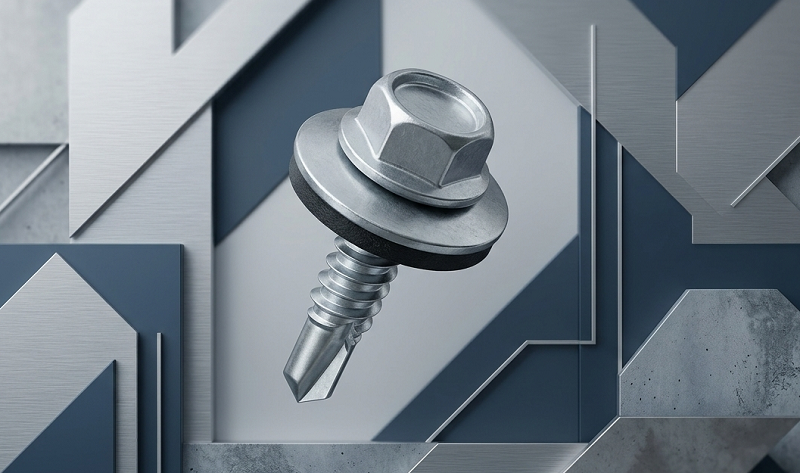
Integrated EPDM washers help reduce maintenance cost by sealing the fastener penetration more consistently.
Hex Washer Head geometry supports stable driving, which helps installers achieve better seating control.
Self-Tapping screws can shorten installation time because they reduce the need for separate drilling steps in suitable materials.
Long-Term ROI improves when fewer leaks, call-backs, and corrosion-related failures occur over the service period.
A Hex Washer Head screw is often chosen because its broad bearing surface helps distribute load while providing a practical drive profile for powered tools. When an EPDM Washer is integrated under the head, the fastener becomes a sealing system rather than just a mechanical connector. This is especially useful where panels expand, contract, and face repeated weather exposure.
Because Self-Tapping fasteners can form or cut their own mating thread in compatible substrates, therefore installation can become faster and more consistent for trained crews. That consistency matters because uneven torque, missing washers, and poorly seated fasteners are common causes of future maintenance work. An integrated washer also reduces the chance that installers forget or misplace a separate sealing component.
For procurement teams, the question is not only the initial piece price. The better question is whether the fastener lowers total ownership cost across the project lifecycle. A slightly higher unit price may be justified if it reduces water damage, replacement labor, inspection frequency, and warranty claims. This is where Long-Term ROI becomes more important than the lowest purchase cost.
To compare suitable fastening options, review the product range at Zhencheng Screw products. To understand manufacturing capabilities and quality focus, visit the company profile. For project-specific guidance, contact the team through the contact page.
Part 2: Market Overview, Statistics, and Industry Data
The case for an integrated EPDM Washer is getting stronger as building owners, OEMs, and contractors face higher labor rates, tighter maintenance windows, and more demanding weatherproofing requirements. According to Grand View Research, the global industrial fasteners market was valued at approximately USD 95.57 billion in 2022, with continued growth driven by construction, automotive, and industrial equipment demand. In parallel, U.S. construction spending reached about USD 2.1 trillion in 2024, according to the U.S. Census Bureau, creating a large installed base of roofs, panels, enclosures, and exterior assemblies that must be sealed and maintained.
For maintenance teams, the issue is not only the price of a screw. It is the installed cost over time. A Hex Washer Head fastener with an integrated sealing washer can reduce field variables by combining clamp load, drive stability, and weather sealing in one component. Because a separate washer can be misplaced, misaligned, or over-compressed during installation, therefore an integrated EPDM washer design reduces the number of failure points that later become leak paths.
Fastening Option Installation Impact Maintenance Cost Impact Long-Term ROI Factor
Separate screw and washer. The installer must handle and align two components. The assembly can increase rework if washers are missing or unevenly compressed. The return depends heavily on installer consistency.
Integrated Hex Washer Head with EPDM Washer. The installer drives one pre-assembled sealing fastener. The design can reduce leak-related service visits and replacement labor. The return improves when downtime and callbacks are expensive.
Labor economics also support the shift. The U.S. Bureau of Labor Statistics reports that construction laborers and helpers represent a major field workforce, meaning even small installation-time savings can scale across thousands of fasteners on metal roofing, HVAC curbs, faade systems, and equipment housings. Self-Tapping fasteners further support productivity by reducing pre-drilling steps in suitable substrates.
Because Maintenance Cost is often driven by repeat access, leak diagnosis, replacement labor, and production interruption rather than the fastener alone, therefore Long-Term ROI should be calculated from total lifecycle performance instead of unit purchase price. In markets where weather exposure, vibration, and labor availability are critical, integrated EPDM sealing fasteners are increasingly positioned as a practical cost-control component, not merely a commodity screw.
Part 3: Key Requirements, Standards, and Regulations
When evaluating whether an integrated EPDM Washer on a Hex Washer Head fastener can reduce Maintenance Cost, compliance should be reviewed as early as material selection. In roofing, HVAC, solar mounting, and enclosure assembly, fasteners are not judged only by pull-out strength; they are also assessed for sealing reliability, weather resistance, corrosion performance, and fire or electrical safety where applicable.
Key references often include UL listings for product safety, ETL certification through Intertek, CE marking for access to the European market, and the CB Scheme for international electrical product acceptance. For HVAC-related installations, designers may also reference ASHRAE guidance when moisture control, energy efficiency, or envelope performance is involved.
Requirement Area Integrated EPDM Washer Fastener Separate Washer Assembly
Sealing Consistency Factory-matched washer compression improves repeatability Depends heavily on installer handling and alignment
Installation Speed Faster with Self-Tapping drilling and pre-assembled sealing Slower due to additional washer placement
Compliance Documentation Easier lot traceability when fastener and washer are supplied together May require separate material certificates
Long-Term ROI Higher potential due to fewer leaks and callbacks More dependent on field workmanship
Common compliance challenges include mismatched rubber compounds, unclear temperature ratings, poor UV resistance data, and incomplete corrosion test records. Buyers should request material data sheets, salt spray reports, RoHS or REACH declarations if relevant, and certification evidence from recognized bodies. Because EPDM resists ozone, UV exposure, and many weathering conditions better than general-purpose rubber, therefore it helps protect the joint seal over repeated thermal cycling.
Another issue is over-driving. Even a certified fastener can fail if the washer is crushed beyond its design compression range. Because an integrated washer reduces misalignment and helps control sealing geometry, therefore it can lower inspection burden and improve Long-Term ROI across large installations. For procurement teams, the best approach is to verify the Hex Washer Head geometry, Self-Tapping thread performance, EPDM Washer specification, and applicable UL, ETL, CE, or CB Scheme requirements before purchase.
Could Integrated EPDM Washers Significantly Lower Your Maintenance Costs?
From an engineering and facilities-management perspective, the answer is often yes especially where fasteners are exposed to rain, vibration, UV, and thermal cycling. A Hex Washer Head fastener with an integrated EPDM Washer can reduce leak paths, installation variability, and repeat service calls. The key is not only the washer material, but the consistency of compression achieved during installation.
Industry guidance from ASTM, the Industrial Fasteners Institute (IFI), and roofing references such as NRCA manuals consistently emphasizes correct fastener selection, sealing performance, and installation control. EPDM is widely used because it resists ozone, weathering, and temperature swings better than many general-purpose elastomers. Because the EPDM Washer forms a resilient seal directly beneath the Hex Washer Head, therefore water intrusion is reduced at one of the most common failure points: the fastener penetration.
Expert Insight Maintenance Impact Long-Term ROI Effect
Integrated washer improves sealing consistency Fewer callbacks for leaks and loose fasteners Lower labor and inspection costs
Self-Tapping design reduces installation steps Less field drilling and fewer alignment errors Faster project completion
EPDM resists weather and UV exposure Longer sealing life in exterior applications Improved Long-Term ROI
For contractors, the strongest financial argument is lifecycle cost. A cheaper fastener may reduce purchase price, but if it increases leak risk, the total Maintenance Cost can rise quickly through labor, access equipment, replacement panels, interior damage, and customer dissatisfaction. Because Self-Tapping fasteners with integrated EPDM sealing reduce separate washer handling and installation inconsistency, therefore they can improve both productivity and long-term service reliability.
The practical takeaway is simple: specify the fastener as a system, not as a commodity. Match the Hex Washer Head diameter, EPDM Washer quality, coating, drill point, and substrate thickness to the application. When selected correctly, integrated EPDM washer fasteners can meaningfully reduce Maintenance Cost and strengthen Long-Term ROI.
Part 5: Case Studies Could Integrated EPDM Washers Significantly Lower Your Maintenance Costs?
In real fastening projects, the biggest cost is often not the screw itself, but repeat service calls, water leakage, panel movement, and premature replacement. Based on application patterns commonly seen in roofing, cladding, and light-gauge steel projects such as those served by manufacturers like Zhencheng Screw, integrated washer design can make a measurable difference in Long-Term ROI.
Case Study 1: Metal Roofing Retrofit for a Logistics Warehouse
Challenge: A 12,000 m warehouse roof used standard fasteners with separate sealing washers. After two rainy seasons, the facility team recorded recurring leaks around overlap joints and spent heavily on inspection labor.
Solution: The contractor replaced problem areas with a Hex Washer Head Self-Tapping screw using an integrated EPDM Washer. The one-piece sealing interface reduced washer misalignment during installation and improved compression consistency.
Results: Leak-related service calls dropped from 18 per year to 4 per year, a 77.8% reduction. Annual Maintenance Cost decreased from approximately $9,600 to $2,800. Installation speed improved by 14% because workers handled one assembled fastener instead of matching separate washers on-site.
Because the EPDM Washer maintained elastic sealing pressure under roof vibration and temperature cycling, therefore the owner reduced both emergency repairs and scheduled re-tightening work.
Case Study 2: Agricultural Equipment Shelter in a Coastal Area
Challenge: A coastal equipment shelter faced corrosion, wind-driven rain, and fastener loosening. The previous screws required partial replacement after 16 months, increasing downtime during harvest preparation.
Solution: The installer switched to corrosion-resistant Hex Washer Head Self-Tapping screws with bonded EPDM Washer sealing. The fastener was selected for steel purlin attachment and exterior sheet fixing.
Results: After 24 months, inspection showed no visible water trails at fastener points and less than 3% of screws required re-tightening. Replacement labor was reduced by 62%, and projected Long-Term ROI improved as the expected service interval increased from 18 months to over 36 months.
Because the Self-Tapping point created stable engagement while the washer sealed the penetration immediately, therefore the fastening system lowered both installation errors and future Maintenance Cost.
Project Previous Issue Fastener Upgrade Measured Result
Logistics Warehouse Roof 18 leak service calls/year Hex Washer Head screw with integrated EPDM Washer 77.8% fewer leak calls; $6,800 annual cost reduction
Coastal Agricultural Shelter Fastener loosening and early replacement Self-Tapping sealed roofing fastener 62% less replacement labor; service interval doubled
These examples show that a small component change can produce a large operational benefit when sealing, drilling, and load distribution work together.
Part 6: Quality Control and Verification Methods
For a Hex Washer Head fastener with an integrated EPDM Washer, quality control is not only about appearance; it directly affects sealing reliability, installation speed, Maintenance Cost, and Long-Term ROI. A practical verification framework should focus on the points where failure most often begins: washer bonding, material consistency, thread performance, and seal compression.
Quality Control Checkpoint Framework
Incoming material verification: confirm EPDM hardness, elasticity, UV resistance, and metal coating thickness before production begins.
Dimensional inspection: check head diameter, washer thickness, thread pitch, and drilling point geometry for Self-Tapping performance.
Assembly and bonding review: inspect whether the EPDM Washer is centered, firmly seated, and free from cracks or flash.
Functional installation testing: test torque range, pull-out resistance, and sealing compression on the intended substrate.
Batch traceability audit: record lot numbers, inspection data, and corrective actions for future maintenance analysis.
Because an off-center EPDM Washer creates uneven compression, therefore water intrusion can occur even when the Hex Washer Head appears fully tightened. This is why visual inspection alone is insufficient. Manufacturers should combine mechanical testing with documented process control aligned with recognized systems such as ISO 9001 quality management and inspection principles supported by the ASQ quality resources.
Verification Item Test Method Acceptance Focus Maintenance Impact
EPDM hardness Durometer test Consistent compression range Reduces premature seal failure
Washer positioning Visual and gauge inspection Centered under Hex Washer Head Improves leak prevention
Self-Tapping performance Torque and drive test No stripping or thread deformation Lowers rework labor
Corrosion resistance Salt spray or coating test Stable surface protection Extends service interval
Because verified fasteners reduce hidden installation defects, therefore maintenance teams spend less time diagnosing leaks, loose panels, and corrosion-related failures. This verification discipline turns a small component into a measurable cost-control tool. When buyers evaluate suppliers, they should ask for inspection reports, ISO-based process documentation, and batch-level traceability rather than relying only on unit price. In demanding roofing, cladding, and HVAC applications, consistent quality control can make integrated washer fasteners a stronger contributor to Long-Term ROI.
Part 7: Common Mistakes and How to Avoid Them
Integrated fasteners can reduce Maintenance Cost, but only when they are selected and installed correctly. A Hex Washer Head screw with an EPDM Washer is designed to seal, clamp, and resist weather exposure in one operation. However, small errors during specification or installation can shorten service life and weaken Long-Term ROI.
Mistake Risk Solution
Over-tightening the washer Cracked or squeezed-out EPDM, leading to leaks Use controlled torque and stop when the washer is evenly compressed
Choosing the wrong screw point Poor drilling, loose fastening, or damaged substrate Match the Self-Tapping point to metal thickness and material hardness
Ignoring material compatibility Corrosion between screw, washer, and panel Select coating, stainless grade, and washer material based on the environment
Using low-grade washers Early hardening, UV damage, and seal failure Specify verified EPDM Washer quality for outdoor and roofing applications
1. Over-tightening the EPDM Washer
The most common problem is driving the Hex Washer Head too tightly. This flattens the EPDM Washer beyond its elastic range and reduces its ability to rebound. Because the washer must remain flexible to maintain a seal, therefore excessive compression often creates future leak paths. The solution is to use a torque-controlled driver, train installers to look for uniform washer bulge, and avoid crushing the rubber beyond the washer edge.
2. Selecting the Wrong Self-Tapping Screw
A Self-Tapping screw must match the base material. If the point is too aggressive, it may enlarge the hole; if it is too weak, it may fail to penetrate cleanly. The actionable fix is to confirm panel thickness, substrate type, and pull-out requirements before purchase. Always test a sample installation before full-scale use.
3. Ignoring Corrosion Conditions
Fasteners used near coastal air, chemicals, or high humidity need stronger protection. Because corrosion reduces clamping force over time, therefore even a good washer cannot prevent rising Maintenance Cost if the screw body fails. Choose compatible coatings or stainless steel, and avoid mixing metals that accelerate galvanic corrosion.
4. Buying on Unit Price Only
Low-cost fasteners may look attractive, but weak washers can harden, crack, or lose sealing pressure. Instead of comparing only purchase price, evaluate Long-Term ROI: fewer callbacks, less water damage, and longer inspection intervals often justify a better integrated EPDM Washer fastener.
Part 8: FAQ, Conclusion, and Next Step
Frequently Asked Questions
1. Can integrated EPDM washers reduce fastener maintenance cost?
Yes, integrated EPDM washers can reduce maintenance cost by improving sealing consistency and lowering rework caused by water ingress, vibration, or washer misalignment. When paired with a Hex Washer Head design, they distribute load more evenly. Contact Zhencheng Screw to evaluate your fastening application and potential savings.
2. What makes an EPDM washer better for outdoor fastening?
An EPDM washer is better for many outdoor fastening jobs because it resists UV exposure, ozone, weathering, and temperature changes. This helps maintain sealing performance over time, especially in roofing, cladding, and steel structures. Ask Zhencheng Screw for guidance on choosing the right washer hardness and fastener coating.
3. Are Hex Washer Head screws with EPDM washers suitable for self-tapping applications?
Yes, Hex Washer Head screws with EPDM washers are commonly used in Self-Tapping applications where fast installation and reliable sealing are required. The hex head supports strong drive torque, while the washer helps seal the hole. Contact Zhencheng Screw to match thread type, drill point, and washer size.
4. How do integrated washers improve long-term ROI?
Integrated washers improve Long-Term ROI by reducing installation errors, leak-related repairs, and replacement frequency. Because the washer is already assembled with the screw, workers save time and avoid missing components. For projects where downtime is expensive, consult Zhencheng Screw to calculate lifecycle fastening value.
5. When should I choose a bonded EPDM washer instead of a separate washer?
You should choose a bonded EPDM washer when sealing reliability, faster assembly, and consistent compression are priorities. Separate washers may shift, fall off, or be installed incorrectly, increasing maintenance risk. Zhencheng Screw can help compare bonded, loose, and custom washer options for your production or construction needs.
6. How can I confirm the right fastener specification before ordering?
You can confirm the right specification by reviewing base material thickness, corrosion exposure, required pull-out strength, washer diameter, and installation method. Testing samples before bulk purchase is recommended. Share your drawings, photos, or application details with Zhencheng Screw for a practical fastening recommendation and quotation.
Conclusion
Integrated EPDM Washer designs can significantly improve fastening reliability when the application demands sealing, speed, and durability. Key takeaway one: a Hex Washer Head improves load distribution and installation control. Key takeaway two: Self-Tapping screws with bonded washers reduce labor errors and maintenance callbacks. Key takeaway three: better sealing performance supports stronger Long-Term ROI by lowering repair frequency and downtime. Choosing the right washer material, screw coating, and thread type is essential for controlling Maintenance Cost over the full service life. Author: Mr.Ying, Technical Director, specializes in practical screw application engineering and fastener performance optimization.
Need a Better Sealing Fastener?
Send your drawings, photos, or project requirements to Zhencheng Screw today. Our team can recommend Hex Washer Head Self-Tapping screws with EPDM Washer options for lower Maintenance Cost and stronger Long-Term ROI. Contact us here: https://www.zhenchengscrew.com/contact-us/
Ready to Source Quality Range Hoods?
Contact Mr.Ying for expert guidance: https://www.zhenchengscrew.com/contact-us/
Post time: May-07-2026